 |
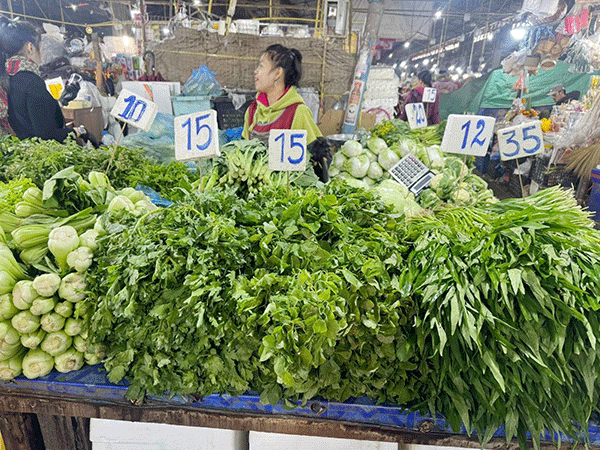
Vegetables on sale at the Lao-Aussie Fresh Market in Vientiane as lower food prices helped ease inflationary pressures in December. --Photo Lao-Aussie Fresh Market |
Inflation eases to 5.6 percent in December as food prices fall
Laos recorded an inflation rate of 5.6 percent in December 2025, according to the latest Consumer Price Index (CPI) published by the Ministry of Finance’s Lao Statistics Bureau (LSB).
The year-on-year inflation rate represents continued moderation from earlier peaks in 2025. On a month-to-month basis, prices in general dipped by 0.3 percent compared to November, marking the second consecutive monthly decline and providing some relief for consumers.
However, higher prices in the housing, water, electricity, and cooking fuel category drove up inflation over 2025, surging 18.1 percent year-on-year. The price of electricity skyrocketed by 105.0 percent, while water bills increased by 40.1 percent, significantly impacting household budgets across the country.
Healthcare costs also continued their upward trajectory, with the sector posting a 14.4 percent annual increase. The cost of hospital services jumped 26.4 percent, while the price of pharmaceutical products rose by 13.8 percent. The education sector recorded an 11.4 percent inflation rate, driven by higher tuition fees and a 19.2 percent average increase in supplementary tutoring fees.
Clothing and footwear prices rose 8.1 percent over 2025, with women’s clothing experiencing a particularly sharp 25.2 percent increase.
The LSB’s report noted that price rises in clothing and household goods were linked to an increase in the value of the Thai baht, highlighting the extent to which Laos is affected by the financial circumstances of its regional partners.
The miscellaneous goods and services category saw the steepest annual increase at 29.2 percent, driven primarily by the rising cost of jewellery and gold accessories, which jumped 58.8 percent.
However, December brought some slight relief for consumers as the price of food and non-alcoholic beverage prices dipped by an average of 0.8 percent compared to November.
The falling price of vegetables spearheaded the decline, with shallots dropping 35.4 percent, coriander 29.6 percent, and cucumbers 16.4 percent. Pork prices edged down 1.4 percent, while the cost of sticky rice dipped by 0.4 percent.
Transport costs also eased slightly, declining 0.6 percent month-over-month as fuel prices fell 3.7 percent, providing respite for households after sustained increases earlier in the year.
Prices in other categories continued to rise, with housing-related costs increasing 0.6 percent and electricity bills climbing 1.6 percent in December. The cost of healthcare increased by 0.5 percent, while the overall price of miscellaneous goods and services rose by 1.7 percent.
The Lao Statistics Bureau’s report distinguished between core and non-core inflation, to provide deeper analysis. Core inflation, which excludes heavily-fluctuating items like fresh food and energy, was recorded at 6.9 for 2025, while non-core inflation stood at 4.2 percent.
Analysing domestically-produced versus imported goods, the report shows the cost of Lao-made goods increased by 6.5 percent while the average cost of imported goods rose by 3.8 percent. This suggests that domestic supply conditions and local cost factors are playing a stronger role in price rises than imported goods.
The December figures reflect a complex inflationary environment. While the overall rate has moderated significantly from peaks exceeding 15 percent in early 2025, structural pressures remain in key sectors affecting household budgets. The dramatic increase in utility costs, particularly electricity, is a significant burden for families and businesses alike.
As Laos navigates its economic development path, managing inflation while supporting growth remains a key challenge. The government continues to monitor price changes closely, particularly those of basic goods and services that most directly affect people’s standard of living.
By Times Reporters
(Latest Update January 5, 2026)
|

