 |
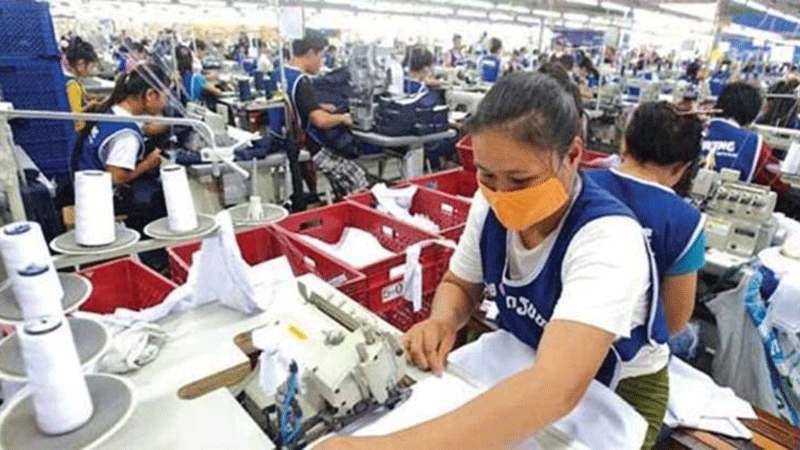
Workers in a Vientiane garment factory. |
Govt outlines plan to improve workers’ skills, create more jobs
The government has announced a five-year strategy aimed at strengthening workforce skills and expanding employment opportunities both domestically and overseas.
The plan was outlined in a report presented on Tuesday by Prime Minister Sonexay Siphandone to the National Party Congress.
Under the plan, the government aims to upskill 650,000 workers and provide job opportunities for 411,000 people, both in Laos and other countries, over the next five years, marking a significant increase from previous targets.
The initiative reflects government efforts to address persistent challenges in the workforce, including weak skills, worker migration, and low wages.
Over the previous five-year period, the government reported strong gains in workforce development and employment outcomes. Collaborative programmes between the public and private sectors provided skills training for 159,837 young people, far exceeding original targets.
In total, 464,514 people secured employment, 18.4 percent more than the target figure, highlighting improved job market coordination and placement efforts.
To support workers in the face of the spiralling cost of living, the government increased the monthly minimum wage to 2.5 million kip in 2024, aligning wages more closely with prevailing economic conditions.
The pay raise followed broader policy measures requiring employers to provide allowances to ensure low-wage workers earned at least the minimum monthly income.
Despite these achievements, large numbers of people continue to leave Laos to seek jobs in neighbouring countries, while incomes remain far below the cost of living.
Inflation has seen many people to turn to self-employment or take jobs in other countries.
According to the Ministry of Labour and Social Welfare, the share of the population reporting active employment increased significantly between 2022 and 2025.
In 2024 the ministry instructed businesses to supplement wages so that workers’ total monthly earnings amounted to at least 2.5 million kip, a move aimed at making domestic employment more sustainable and reducing the incentive to seek work abroad.
To address the worker shortage in key sectors, authorities are introducing more vocational and dual-training programmes that combine classroom instruction with hands-on industry experience.
Priority skill sets include vehicle and machinery repair, agricultural machinery operation, electrical technology, and other fields critical to manufacturing and agribusiness.
The government has also strengthened worker protection under an International Labour Organisation (ILO)-supported project, aiming to reduce discrimination, harassment, and child labour, while aligning national labour practices with international standards.
From 2021 to August 2025, more than 350,000 Lao nationals sought employment overseas, primarily in Thailand, South Korea and Japan, according to the Ministry of Labour and Social Welfare.
Migrant workers sent home an estimated US$366 million in remittances during the first six months of this year. Of this amount, US$32.5 million was transferred through banks, including US$8.3 million via the Indochina Bank and US$24.2 million through the Lao Foreign Trade Bank, the ministry said.
By Phetphoxay Sengpaseuth
(Latest Update January 8, 2026)
|

