 |
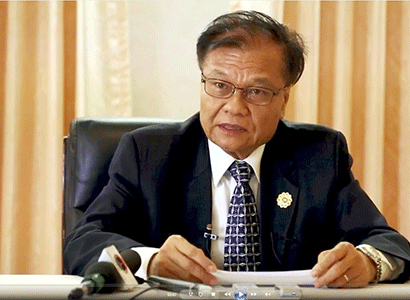
| Mr Savankhone Razmountry, talks to reporters. (File photo) |
First National Media Congress marks new chapter for journalism in the digital age
As Laos accelerates its digital transformation, the country’s media sector is preparing to enter a new era with the 1st National Media Congress, which will take place in Vientiane from July 13-15.
The landmark event is expected to bring together media professionals from across the country to exchange ideas, strengthen cooperation, and chart a common vision for the future of journalism in an increasingly digital world.
The congress comes at a pivotal moment for the Lao media sector as technological innovation, changing audience behaviour, and the rapid growth of digital platforms continue to reshape the way news is produced, distributed and consumed. Against this backdrop, the gathering will provide an important opportunity to review the sector’s achievements, address emerging challenges, and identify practical strategies to strengthen the role of the media in national development.
In an exclusive interview recently with the Vientiane Times, an alternate member of the Party Central Committee, Standing Member of the Party Committee, and Deputy Head of the Commission for Information and Education of the Central Committee, Dr Khammon Chanthachit, underscored the significance of the congress and its role in shaping the future direction of the country’s media.
According to Dr Khammon, the congress is particularly significant following the transfer last year of the country’s five principal state media organisations—Lao Press in Foreign Languages (Vientiane Times), Lao National Radio, Lao National Television, Pasaxon newspaper, and the Lao News Agency—to the supervision of the Commission for Information and Education of the Central Committee.
“This institutional restructuring is an important step in strengthening the Party’s leadership over the media and ensuring greater unity in communication, information dissemination and ideological education,” he said.
Dr Khammon explained that the congress will help redefine the role of the media under these new circumstances while promoting a transformation in both mindset and working methods. More importantly, it seeks to ensure that the media continues to serve as an effective bridge between the Party, the State and the people.
He noted that delegates will examine key issues affecting the development of the media sector, including organisational structures, human resource development, infrastructure, technical facilities and financial management. The outcomes of these discussions are expected to contribute to a new policy framework that will guide the future development of journalism in Laos.
One of the congress’s most significant expected outcomes is a proposal for the Politburo of the Party Central Committee to issue a new resolution on strengthening the Party’s leadership and the State’s management of the media in the new era. The proposed resolution would replace Resolution No. 36/PPCC, which has guided the country’s media sector since June 1993.
For decades, newspapers, radio, television and the Lao News Agency have played a vital role in informing the public, supporting national development, preserving the country’s cultural heritage and strengthening social cohesion throughout Laos. As the media landscape evolves, these traditional roles remain as important as ever, even as media organisations adapt to new technologies and changing audience expectations.
Today, increasing numbers of people access news through digital platforms and mobile devices, creating new opportunities as well as new challenges for media organisations. In response, newsrooms across the country are modernising their operations, expanding their digital presence and embracing innovative methods of news production while maintaining professional standards and editorial responsibility.
At the same time, Lao media organisations continue to strengthen cooperation with partners around the world, promoting friendship, development cooperation and greater regional and international integration.
President of the Lao Journalists’ Association, former Deputy Minister of Information, Culture and Tourism, and former Editor-in-Chief of the Lao Press in Foreign Languages, Mr Savankhone Razmountry, described the congress as a defining moment for the country’s media sector.
“The congress is more than a gathering of journalists and media organisations. It is a milestone that demonstrates our shared commitment to strengthening professionalism, embracing digital transformation, and preparing the media for the opportunities and challenges of the future,” he said.
Mr Savankhone said the congress offers an important platform for media professionals from throughout the country to exchange experiences, strengthen cooperation and develop a shared vision for the future of journalism in Laos.
“Technology is changing the way news is produced and consumed. While artificial intelligence and digital platforms offer powerful new tools, the fundamental values of journalism remain unchanged. Accuracy, credibility, responsibility and public trust must continue to guide our work,” he said.
He stressed that investment in journalists—particularly younger media professionals—will be essential to building a modern, resilient and innovative media sector capable of meeting the needs of the public in the digital age.
“Our goal is to develop media professionals who are not only technically skilled but also committed to ethical journalism and lifelong learning. By working together and learning from regional and international partners, the media can continue to innovate while preserving its identity and fulfilling its responsibility to national development,” Mr Savankhone said.
He also expressed confidence that the congress would become a permanent platform for cooperation, professional development and innovation, helping to build a stronger, more resilient and future-ready media community.
To achieve these objectives, the congress has adopted the slogan: “Strengthen the Party’s Leadership Role and Advance Media Development towards Greater Strength and Quality.”
Guided by this theme, participants will deepen their understanding of the Party’s leadership in media development, the legal framework governing the media sector, and the ethical responsibilities of journalists and media professionals. The programme will also provide opportunities for editors, reporters, broadcasters, photographers, producers and digital content creators to exchange ideas, discuss emerging trends and explore practical ways to strengthen professional standards, enhance cooperation and reinforce public confidence in the media.
As Laos continues to modernise and deepen its integration with the regional and global community, the role of journalism is becoming increasingly important in helping citizens understand national priorities, economic reforms, social development and international cooperation. A modern media sector, supported by skilled professionals and innovative technologies, will play a vital role in ensuring that accurate, timely and credible information reaches the public.
The First National Media Congress is therefore more than a professional gathering. It represents a collective commitment to building a stronger, more innovative and more resilient media sector while preserving the core values of journalism—credibility, responsibility, professionalism and public service.
As delegates conclude the three-day congress, the event is expected to lay the foundation for closer collaboration, stronger institutions and a more dynamic media landscape capable of responding to the opportunities and challenges of the digital era. The congress is also expected to serve as a milestone in the continuing development of Lao journalism, helping ensure that the country’s media remains responsive to change while continuing to contribute meaningfully to national development in the years ahead.
By Times Reporters
(Latest Update July 13, 2026)
|

