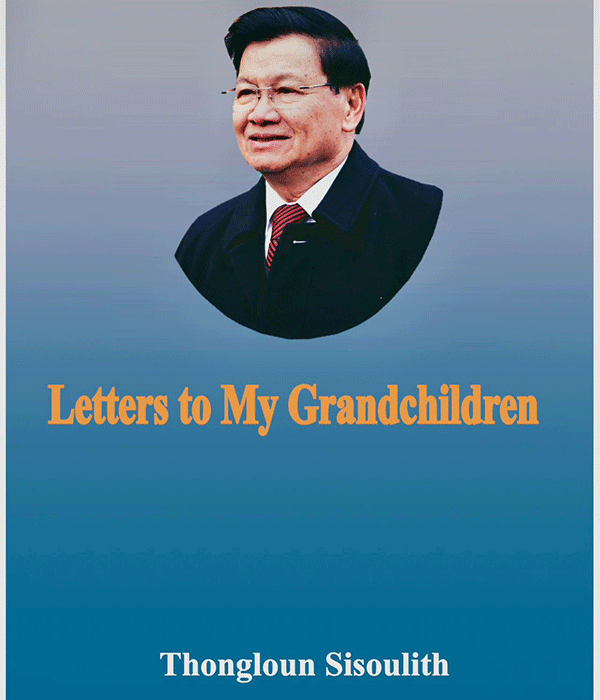
What lessons would a nation’s leader choose to leave for future generations?
Continued from the last issue
In Letters to My Grandchildren, President Thongloun Sisoulith opens a window into his life through a collection of heartfelt letters written during official journeys abroad between 2014 and 2019. More than a family memoir, the book recounts an extraordinary journey from a humble childhood in a remote village in Huaphan province to the highest office in the Lao PDR.
Through vivid recollections of hardship, perseverance, education, and public service, President Thongloun shares the experiences and values that shaped his character and leadership. Readers will encounter the story of a young boy who crossed rivers to attend school, overcame poverty and adversity, and remained steadfast in his pursuit of knowledge and service to the nation.
Rich with personal reflections and life lessons, Letters to My Grandchildren offers a rare and intimate portrait of the man behind the presidency while providing inspiration for young people, parents, and leaders alike. It is a story not only of one individual’s journey but also of resilience, dedication, and the enduring belief that determination can transform even the most modest beginnings into a life of remarkable achievement.
The book comprises 12 chapters, and the Vientiane Times will present each chapter in the newspaper.
Chapter 3 - The Path Toward Teacher-Training (Primary Level), First Intake of the Lao Patriotic Front
Incidents like this happened often, because the enemy would slip into the village to raid—stealing ducks and chickens, rice, fish, and other food—then melt away.
I stayed home for a week, then told my parents I was going back to Xamneua to prepare for the entrance exam to the teacher-training school that was about to open. I mentioned it over dinner. My father and mother were startled and no one said anything; after we finished eating, we all just sat there in silence.
The next day my father said to me: “Your mother and I talked it over all night, and in the end, we agreed to let you go to Xamneua. But we’re worried—about your safety, who you’ll stay with, how you’ll live. The road is long and rough, and it’s dangerous; the enemy is very active. Along the route from our village to Xamneua (about 40–50 kilometres) there are frequent clashes between our forces and the enemy. If you decide to go, I’ll take you.” At that time I was torn. If my father escorted me, on the one hand he wasn’t in very strong health.
It would be two days and two nights on foot, sleeping along the way, and then he would have to make the return journey alone—I worried about him. So I found another way: I talked two classmates into going with me—one from Sob Hao village and the other from Talang village, Hang sub-district—and we decided to travel together.
We packed a blanket apiece, about five kilos of rice, and our shoulder bags, and set out from the village for Xamneua. After walking the whole first day, we spent the night in Muangpua village.
Continued to the next issue
By Times Reporters
(Latest Update July 14, 2026)
|