 |
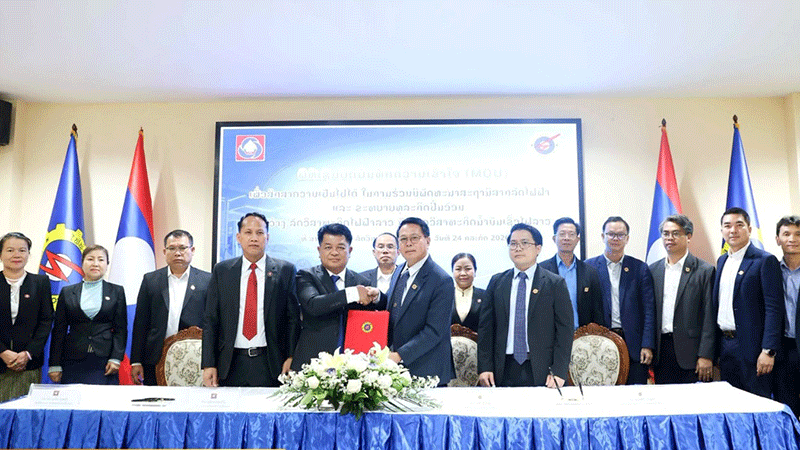
| LSFE Director Mr Viengthong Vongthavilay (left) and EDL Deputy Managing Director Mr Bounthanh Phandolack sign an agreement concerning the development of electric vehicle charging stations. --Photo EDL Laos |
State enterprises join forces to expand EV charging network
More electric vehicle (EV) charging stations could be installed after the Lao State Fuel Enterprise (LSFE) and Electricité du Laos (EDL) signed a Memorandum of Understanding (MoU) last week authorising a feasibility study on the expansion of services for electric vehicles.
The study supports the government’s policy to promote electric mobility, reduce reliance on fuel-powered vehicles, and strengthen Laos’ long-term energy security by making greater use of domestically generated electricity.
The MoU was signed on July 24 at EDL headquarters in Vientiane by LSFE Director Mr Viengthong Vongthavilay and EDL Deputy Managing Director Mr Bounthanh Phandolack, in the presence of senior executives and staff from the two state enterprises.
Under the agreement, the two parties will assess the feasibility of transforming LSFE fuel stations into modern energy service centres equipped with fast-charging facilities for electric vehicles.
The proposed charging stations will support both international and Chinese charging standards, including CCS Type 2 and GB/T, enabling them to serve a wide range of electric vehicle brands already in existence in Laos and those expected to enter the market in the future.
Beyond EV charging, the partners also plan to introduce supporting services such as coffee shops, restaurants, convenience stores and other customer facilities, turning fuel stations into integrated energy service hubs.
According to the Ministry of Industry and Commerce, the initiative is intended not only to expand charging infrastructure but also to establish the foundations of a transport system that is increasingly powered by domestically-produced electricity.
The government spends substantial amounts of foreign currency on imported fuel each year, placing pressure on the country’s trade balance and currency exchange rates, particularly during periods of volatile global oil prices.
The goal now is to make greater use of Laos’ abundant hydropower resources. Expanding the use of electric vehicles would enable better use of domestic energy resources while reducing dependence on imported fossil fuels.
The shift towards electric vehicles is expected to help conserve foreign exchange reserves, strengthen macroeconomic stability, support environmental sustainability and contribute to the government’s ambition to build a green economy.
The partnership also aligns with Prime Minister’s Resolution No. 08/PM, which promotes the adoption of electric vehicles and the wider use of clean energy technologies.
If successfully implemented, the project is expected to establish a nationwide network of EV charging stations while supporting the development of broader EV infrastructure linked to transport, tourism and logistics.
The initiative will enhance the country’s competitiveness, encourage greater EV adoption and position Laos as an emerging regional hub for electric mobility while supporting sustainable economic development.
By Times Reporters
(Latest Update July 29, 2026)
|

