 |
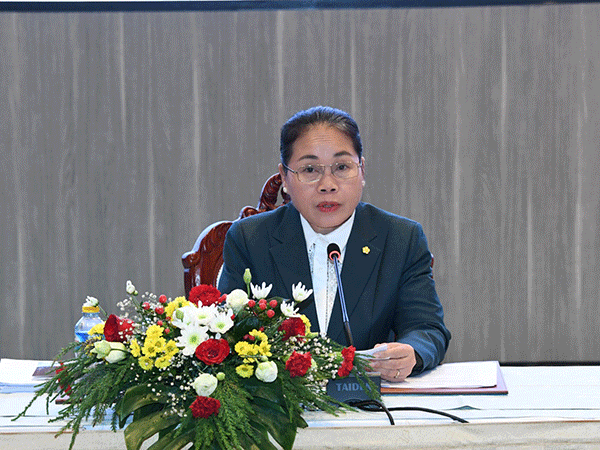
| Deputy Minister of Culture and Tourism Mrs Darany Phommavongsa. |
Zero-dollar tours face tighter scrutiny
Zero-dollar tours and illegal wildlife trade linked to tourism businesses are coming under closer scrutiny as authorities seek to enforce the rules around such activities.
A national meeting to review the legislation governing tourism activities involving the management and protection of endangered wildlife species was held in Vientiane on September 18.
The meeting was chaired by Deputy Minister of Culture and Tourism Mrs Darany Phommavongsa and attended by representatives of central authorities, provincial Departments of Culture and Tourism, and provincial Departments of Agriculture and Environment.
Speaking at the meeting, Acting Director General of the Tourism Management Department, Mrs Siphonphay Sitthixay, said the growth of tourism had created opportunities for some businesses to operate outside the law.
Most zero-dollar package tours operate in a way that reduces the amount of revenue earned for the state and harms the reputation of the tourism industry, while also facilitating the illegal sale and consumption of wildlife and wildlife products through hotels, restaurants, souvenir shops and other establishments, she said.
Mrs Darany said Laos’ natural landscapes, forests, wildlife and biodiversity are important national assets and provide a strong foundation for developing quality tourism products and services.
She stressed that tourism activities involving wildlife must be properly regulated to ensure they comply with the law. Protected wildlife species must not be exploited for commercial gain, meaning they or their parts should not be sold, owned, eaten or otherwise consumed.
She said tourism development should focus on quality, sustainability, environmental responsibility and benefits for local communities.
Certain tourism models based on artificially low prices and non-transparent commercial arrangements result in zero-dollar tours and associated illegal activities.
Mrs Siphonphay reviewed the legislation governing tourism, the current situation surrounding zero-dollar package tours, and proposed measures to address the problem.
She said tourism is a strong contributor to the country’s social and economic development through revenue generation, job creation, and Laos’ visitor appeal as a land of natural beauty.
Director General of the Department of Forestry under the Ministry of Agriculture and Environment, Assoc. Prof. Dr Somvang Phimmavong, outlined the legal framework for wildlife management, including measures to combat transnational wildlife crime, CITES, wildlife categories, prohibited activities, penalties, and the responsibilities of tourism operators.
Deputy Director General of the Department of Natural Resources and Environment Inspection, Mr Khamvanh Keomanyvong, delivered a report on wildlife crime in Laos and its links to tourism.
Inspections at several locations have identified the illegal sale of protected wildlife species and products made from them, including tigers, bears, elephants and rhinoceroses.
Restaurants, markets, souvenir shops, entertainment venues and other tourism establishments are sometimes used as channels for the sale and consumption of such products.
Meeting participants agreed to strengthen legal awareness, information-sharing, inspections and law enforcement at tourism establishments, high-risk locations and border crossings.
Tour operators and guides involved in wildlife-related offences may have their licence suspended or revoked, or face a fine and prosecution.
Members of the public are encouraged to report suspected illegal hunting, possession, transport, sale or consumption of wildlife through the 24-hour hotline number 1528.
By Times Reporters
(Latest Update September 21, 2026)
|

