 |
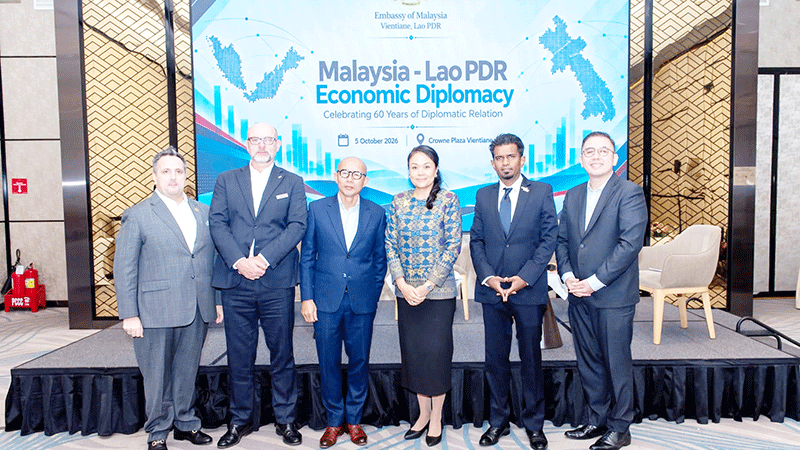
| Key speakers and dignitaries pose for a group photo with Norli Muadza Noor (third from right) at the forum held in Vientiane on October 5. |
Malaysia, Laos explore economic opportunities in Muslim-friendly tourism, digital economy
Malaysia and Laos are looking to deepen their bilateral partnership by exploring fresh economic opportunities in high-growth sectors, particularly Muslim-friendly tourism, hospitality standards, and the digital economy, as both nations celebrate 60 years of diplomatic relations this year.
To mark this milestone journey of six decades of diplomatic friendship, the Malaysia–Laos Economic Diplomacy Forum: Celebrating 60 Years Together was convened at the Crowne Plaza Vientiane on October 5. Bringing together key government leaders, diplomats, industry pioneers, international development partners, and private sector entrepreneurs, the forum provided a high-level platform to translate decades of political trust into practical, future-oriented commercial collaboration.
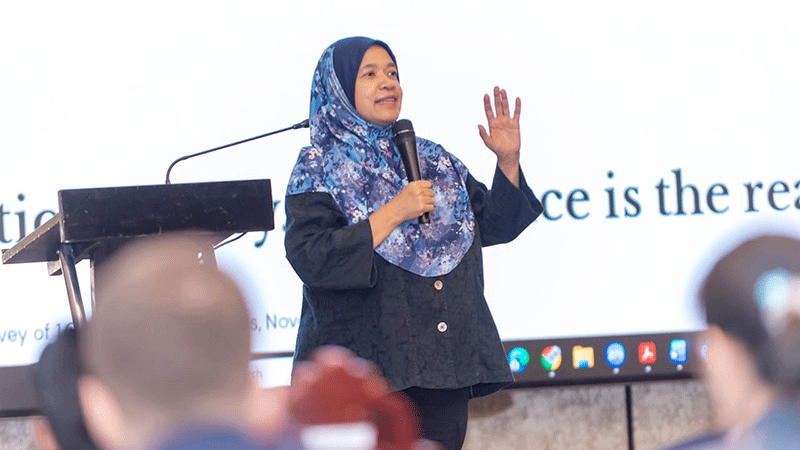 |
| Dr Nuraizah Shamsul Baharin, CEO and Founder of MADCash and regional focal point for Malaysia’s ASEAN Women Entrepreneurs Network, delivers a keynote presentation titled “AI and the Future of Women Entrepreneurship” during the forum in Vientiane on October 5. |
A robust foundation: Six decades of bilateral economic growth
Opening the forum, the Ambassador of Malaysia to Laos, Norli Muadza Noor, reflected on the deep-rooted commercial ties that have bonded the two nations over the past 60 years.
Malaysia is currently the fourth-largest foreign investor in Laos, with total capital investments reaching approximately US$946 million. These investments span vital pillars of the Lao economy, including commercial banking, renewable energy, hospitality, high-value services, and critical infrastructure projects.
Bilateral trade figures further underscore this accelerating trajectory. Trade volume expanded significantly to surpass US$65 million in 2025, rising from roughly US$43million recorded in 2024. Malaysia’s well-established operational presence across the country provides an ideal springboard for expanding commercial dialogue and encouraging broader private-sector engagement from both sides.
Unlocking the global Muslim travel market
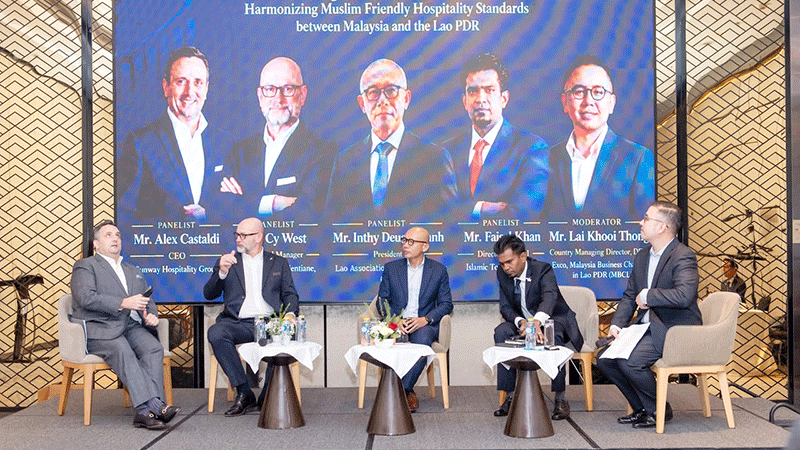
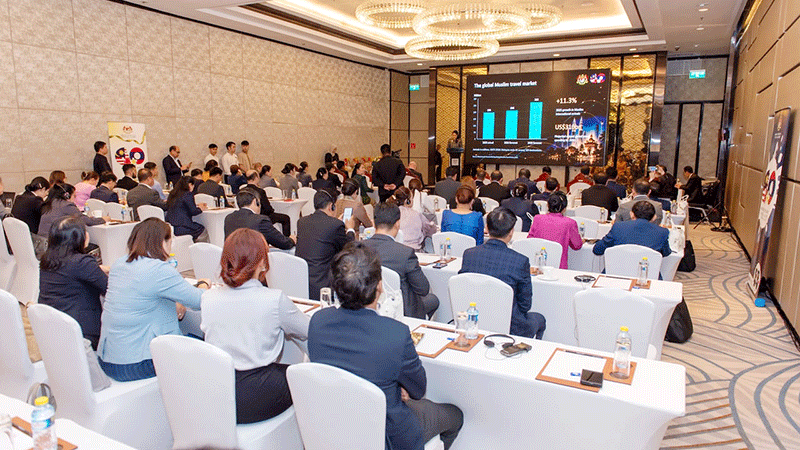
A central highlight of the forum was an engaging panel discussion entitled “Unlocking the Muslim Travel Market: Harmonising Halal Tourism Standards between Malaysia and Laos”. The session examined how Laos can position itself to capture a significant share of the world’s fastest-growing travel segment.
Global Muslim tourism data presented at the event underscored the immense commercial scale of this market. International Muslim traveller arrivals reached 196 million globally in 2025, representing a robust 11.3 percent year-on-year increase. Figures indicate that arrivals are projected to reach 262 million globally by 2030, with annual travel expenditure estimated at approximately US$310 billion worldwide.
For Laos, entering this market represents a valuable opportunity to diversify its visitor demographic without altering its core cultural identity. The country’s renowned strengths in ecotourism, pristine natural landscapes, rich heritage, and Buddhist culture remain paramount, while Muslim-friendly services simply add a new layer of accessibility to welcome an international market looking for inclusive destinations.
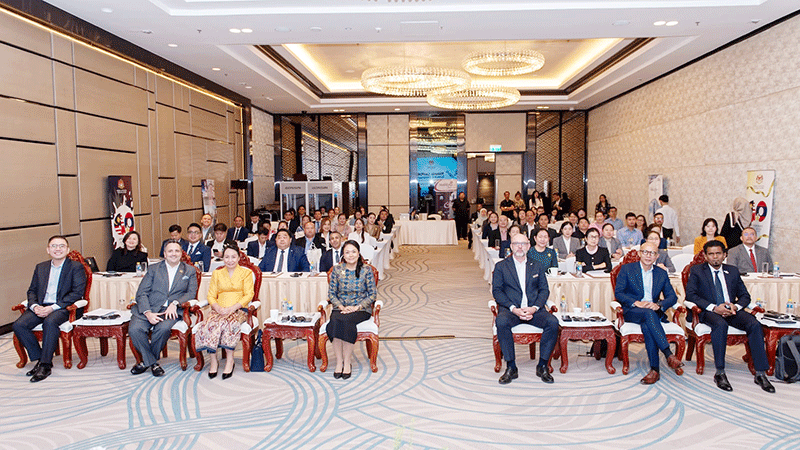 |
| Delegates, government officials, diplomats, and business leaders gather in Vientiane for the Malaysia–Lao PDR Economic Diplomacy Forum on October 5. |
This strategy is bolstered by the position of Laos in mainland Southeast Asia and enhanced regional transport infrastructure. The Laos-China Railway continues to serve as a key economic catalyst, recording 244,000 cross-border passenger trips in the first eight months of 2026 alone, representing a notable jump of over 50 percent compared to the same period in 2025. Coupled with the 2.935 million international tourists welcomed by Laos in the first half of 2026, the potential for expanding niche, high-yield tourism markets is clear.
Developing Muslim-friendly hospitality does not require complex structural overhauls. Rather, simple enhancements, such as improving awareness of halal dining options, providing dedicated prayer facilities, and offering tailored accommodation services, can yield substantial economic dividends for local tourism operators.
Malaysian expertise meets Lao hospitality leadership
The panel session brought together prominent public and private sector leaders from both countries, offering a realistic view of how technical expertise can adapt to local conditions.
From the institutional side, Director-General of Malaysia’s Islamic Tourism Centre (ITC), Mohammad Faisal Abu Suaib Khan, outlined Malaysia’s institutional frameworks, industry benchmarks, and training schemes. Rather than replicating models outright, the focus remains on co-developing tailored training modules, capacity building, and business-to-business partnerships suited to the local landscape.
Providing private-sector hospitality perspectives, Chief Executive Officer of Sunway Hotels & Resorts, Alex Castaldi, shared crucial commercial experience in serving Muslim travellers within international hotel chains.
From the Lao perspective, President of the Lao Association of Travel Agents, Inthy Deuansavanh, emphasised the country’s rich natural assets and growing regional connectivity. He highlighted how market diversification directly aligns with national tourism priorities to increase average visitor spend and length of stay.
Reflecting practical hospitality readiness, General Manager of the Crowne Plaza Vientiane, Cy West, shared how the hotel successfully accommodates Muslim travellers alongside a diverse international clientele, proving that inclusive services can seamlessly integrate into the Lao hospitality sector today.
 |
 |
Bridging tourism with broader business synergies
The benefits of standardising Muslim-friendly services extend well beyond hotel stays and tour itineraries. Malaysia’s long-standing banking presence in Vientiane, represented by institutions such as Maybank, Public Bank, and RHB Bank, provides a ready financial infrastructure to support cross-border business ventures.
As Laos builds out its Muslim-friendly ecosystem, new avenues are opening for small and medium-sized enterprises (SMEs). Malaysian SMEs specialising in food and beverage certification, hospitality training, and specialised services can build joint ventures with local entrepreneurs, driving local employment, skills transfer, and commercial growth.
Empowering entrepreneurs through the digital economy and AI
Beyond tourism, the forum highlighted technological innovation as a vital area for cross-border cooperation through a dedicated knowledge-sharing session titled “AI and the Future of Women Entrepreneurship”.
CEO and Founder of MADCash and regional focal point for the ASEAN Women Entrepreneur Network, Dr Nuraizah Shamsul Baharin, delivered a keynote presentation on leveraging artificial intelligence (AI) to transform Micro, Small, and Medium Enterprises (MSMEs).
Discussions emphasised that AI tools can streamline fundamental operations for small businesses by improving accounting, inventory management, digital marketing, customer research, and cross-border networking.
Participants noted that combining the rich cultural assets of Laos with AI-driven marketing platforms can help local artisans, tour operators, and entrepreneurs present their offerings directly to regional and international buyers.
Much like tourism development, adopting digital tools requires targeted awareness campaigns and structured skill-building workshops to help local enterprise owners stay competitive in an interconnected regional market.
A forward-looking vision for inclusive growth
The Malaysia–Laos Economic Diplomacy Forum demonstrated that six decades of formal diplomatic relations have built a resilient partnership capable of adapting to modern economic opportunities.
By pairing Malaysia’s technical expertise and established economic foundation with the abundant tourism assets, strategic location, and entrepreneurship of Laos, both nations are proving that long-standing friendships can yield practical, mutually beneficial economic outcomes.
As both countries look to the future, this multifaceted partnership in tourism, finance, and digital innovation sets a strong benchmark for sustainable regional development across Southeast Asia.
By Advertorial Desk
(Latest Update October 7, 2026)
|

