 |
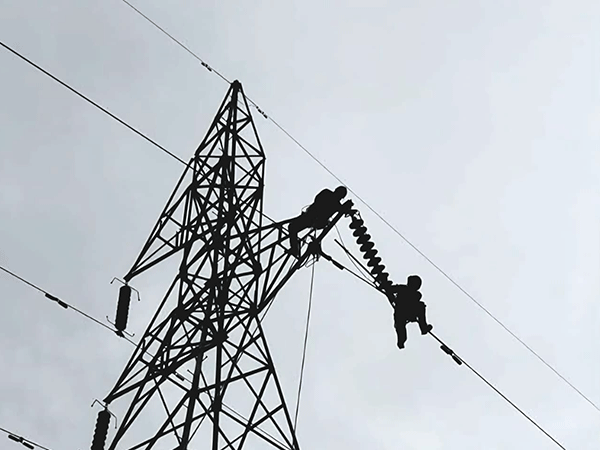
Electricity workers carry out maintenance work on a high-voltage transmission line. --Photo EDL Laos
|
Laos eyes 500MW renewable power exports to Singapore under new partnership
Laos is considering a new agreement to sell up to 500 megawatts (MW) of renewable electricity to Singapore, potentially expanding Laos’ regional electricity market and strengthening its role in the development of the ASEAN Power Grid.
The proposed arrangement would involve the supply of hydropower and other renewable energy sources under a long-term agreement lasting between five and 15 years.
The initiative follows the signing of a Memorandum of Understanding (MOU) between Electricité du Laos (EDL), the Phongsupthavy Group and Singapore-based Tuas Power on October 30, on the sidelines of Singapore International Energy Week at Marina Bay Sands.
According to a report by Singapore’s The Straits Times, the three companies plan to explore the technical and commercial arrangements needed to supply renewable electricity from Laos to Singapore.
Under the proposal, electricity exports would begin at 100MW in the first contract year, increase to 300MW in the second year and rise to 500MW in subsequent years.
Hydropower would be the primary source of electricity, with solar and wind energy potentially supplementing supplies to address seasonal fluctuations in hydropower generation.
Managing Director of Electricité du Laos, Mr Souksavart Sosouphanh, welcomed the proposed partnership, highlighting its potential contribution to regional electricity integration.
As reported by The Straits Times, he said regional electricity trade had made encouraging progress and expressed confidence that stronger cooperation could support the development of a more integrated ASEAN Power Grid.
The agreement would build on the existing Laos-Thailand-Malaysia-Singapore Power Integration Project, which was launched in 2022 to facilitate cross-border electricity trade.
The project initially enabled Singapore to import up to 100MW of hydropower from Laos through existing regional transmission infrastructure. Its permitted capacity has since increased to 200MW.
The newly proposed 500MW arrangement, if implemented in full, would represent more than twice the permitted capacity of the existing integration project.
However, the proposed electricity exports remain subject to regulatory approvals, commercial agreements and the necessary cross-border transmission arrangements.
Managing Director of the Phongsupthavy Group, Mr Somlath Mek Akath, told The Straits Times that electricity would be supplied from the group’s projects in northern and southern Laos.
He identified the securing of bilateral agreements authorising cross-border electricity transmission as a major challenge facing the proposed partnership.
Tuas Power is also seeking the necessary approvals and commercial arrangements, with the companies targeting progress on electricity buyers, regulatory requirements and relevant certification by 2027.
For Laos, the initiative could provide another opportunity to strengthen its position as a regional electricity supplier and participate more actively in cross-border renewable energy trade.
Electricity exports are already a significant contributor to the economy. According to a government report presented to the National Assembly in November, 2025, Laos reported electricity exports totalling 195,602 million kilowatt-hours (kWh) during the 2021-2025 period.
The report, which reviewed progress under the 9th Five-Year National Socio-Economic Development Plan, stated that electricity generation reached 251,052 million kWh, equivalent to 90.93 percent of the five-year target of 276,096 million kWh.
Based on these figures, electricity exports accounted for approximately 78 percent of total generation during the five-year period, underscoring the importance of overseas markets to Laos’ energy industry.
The government valued electricity generation during this period at 259,603 billion kip, exceeding the planned value of 140,879 billion kip.
Against this background, the proposed Singapore partnership could help Laos expand its participation in the regional renewable electricity trade. However, the project remains at the exploratory stage, with its future dependent on commercial negotiations, regulatory approvals, and sufficient cross-border transmission capacity.
By Times Reporters
(Latest Update November 3, 2026)
|

