 |
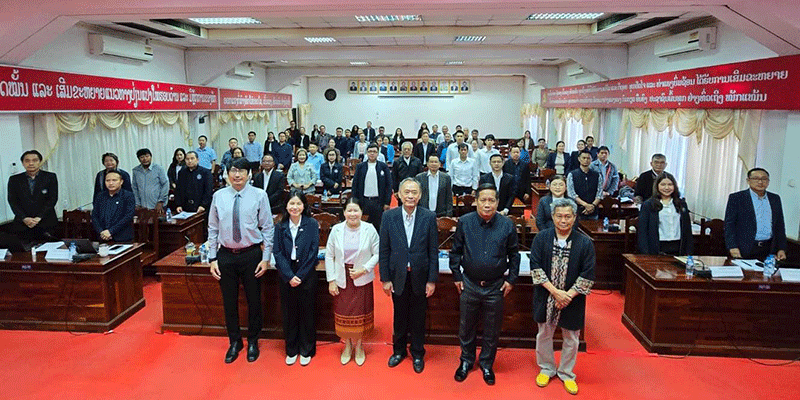
| A workshop to share knowledge and experience takes place in Khammuan province. |
Laos, Thailand managing river water storage for a resilient Mekong
Laos and Thailand are collaborating on the “Solutions and Opportunities in Managing Water Storage to Reduce Transboundary Water-related Disaster Risks and Address Multiple Water Demands” (SOS) project to tackle shared water challenges in the Mekong region.
Funded by Mekong-Australia Partnership (MAP), the Department of Foreign Affairs and Trade (DFAT), Australia, under the Mekong Thought Leadership and Think Tanks Network (MTT) Program.
The initiative aims to improve water storage management, reduce disaster risks, and deliver benefits to marginalised communities.
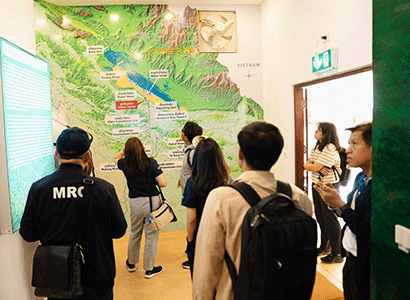
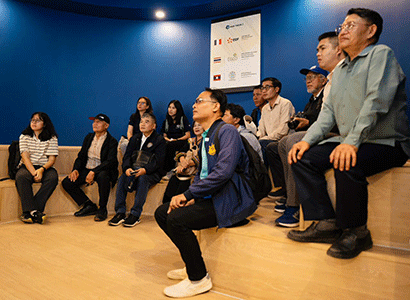
A two-day knowledge exchange meeting was held in Khammuan province which was
attended by representatives from provincial authorities, hydropower dam operators, local communities, academia with more than 60 participants from Thailand and Laos.
The meeting brought stakeholders together to validate findings, identify priorities, and develop a joint concept note for future collaboration.
It also strengthened local capacity with regard to gender equality, disability, and social inclusion, and nature-based solutions.
Key outcomes included stronger regional cooperation, identification of technical solutions and joint action opportunities, and steps toward implementing solutions in water resources management.
Dr Thanapon Piman, from the Stockholm Environment Institute Asia Centre, told the Vientiane Times “We chose Khammuanand Borikhamxay provinces in Laos and Nakhon Phanom and Sakon Nakhon provinces in Thailand as the first study sites for the SOS project.”
“One of the key highlight is that through this project we work with local people, government officials, and dam operators to discuss and streamline how to best manage water, so it benefits everyone and helps avoid disasters,” Dr Thanapon said.
“Natural water storage areas such as Xe Bang Fai in Laos and Nong Han in Thailand are vital for environmental resilience. Today, river levels fluctuate more; we have too little in the dry season and too much in the rainy season. Development projects often fill in these areas for construction, so when the rains come, other areas flooded.”
 |
 |
Lao researcher Dr Oulavanh Sinsamphanh emphasised the project’s layered benefits. “Climate change is creating more problems, so we need to work harder to avoid them. We are helping connect local people and hydropower dam operators to discuss how to better manage river water and reduce negative impacts for both sides. How can dams release enough water for people in the dry season without releasing too much in the rainy season ensuring the benefits are shared?”
Mr Niphon Mulmuangsean, from the River Basin Organisation in Thailand, said the knowledge exchange meeting was crucial because it addressed both dam management and natural storage.
“This ensures people downstream have enough water for their crops,” he said. “In Thailand, we are open to listening to people’s voices, and I am one of those who brings community opinions to the attention of higher levels. We work in the Nam Pung Dam area, Nong Han Marsh, and the Nam Kham River in Sakon Nakhon province.”
“In the past 10 years we have produced monthly reports on how water should be managed so people are safe and have enough for drinking, household use, farming, fishing, tourism, and the environment,” he added.
“Local women are an important part of water management because they are often the ones using the most water for their households, gardens, and drinking. We have many women leaders in various sectors.”
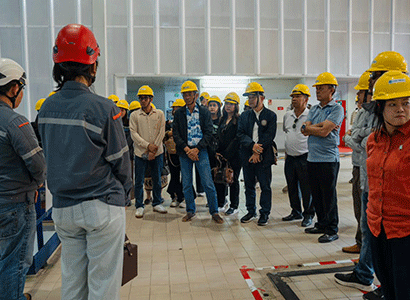
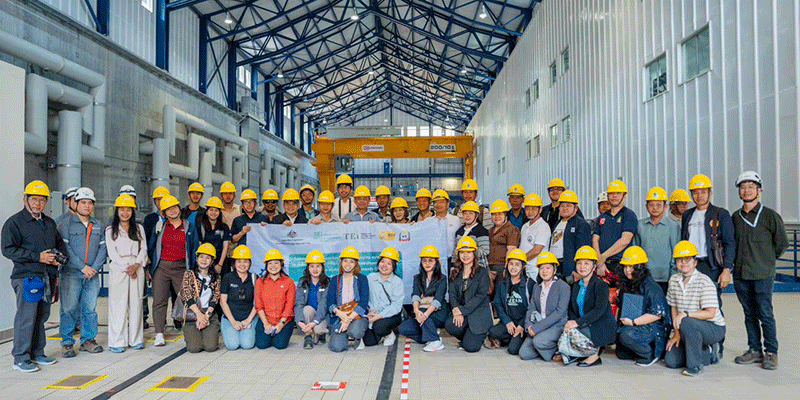
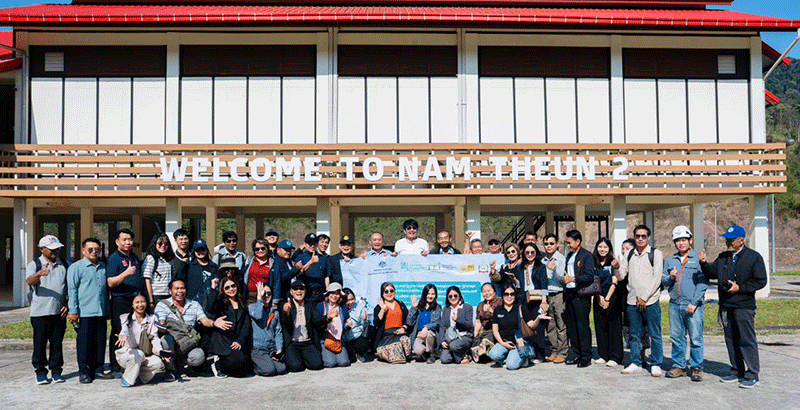
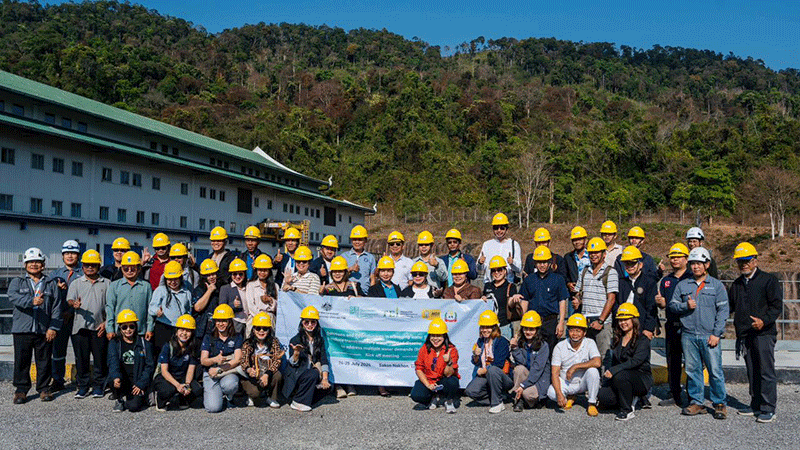
The workshop participants also got the opportunity to visit the Nam Theun I and Nam Theun II power plants to understand their operations, observe the reservoirs and assess their output for rural and urban areas, examine water management practices, and evaluate their benefits for local communities and downstream areas, including sanitation and environmental impacts.
They learned about benefits like clean energy and the associated trade-offs, including impacts on fisheries , forests, and local communities .
In addition, they were informed about safety and dam engineering, such as how the dams hold back massive water pressure and what systems prevent failures. They were told it is a mix of science, engineering, environment, and community impact.
The Lao-Thai knowledge exchange meeting in Khammuan province was significant because it brought different groups together to share their experiences of water use, especially natural water storage management. Protecting these natural storage areas can reduce impact of flooding and ensure adequate water is available in the dry season. This meeting facilitated cross learning amongst local communities, recognising and appreciating the collaborative efforts of various stakeholders in mitigating disaster risks.
 |
| |
By Times Reporters
(Latest Update May 27, 2026)
|