 |
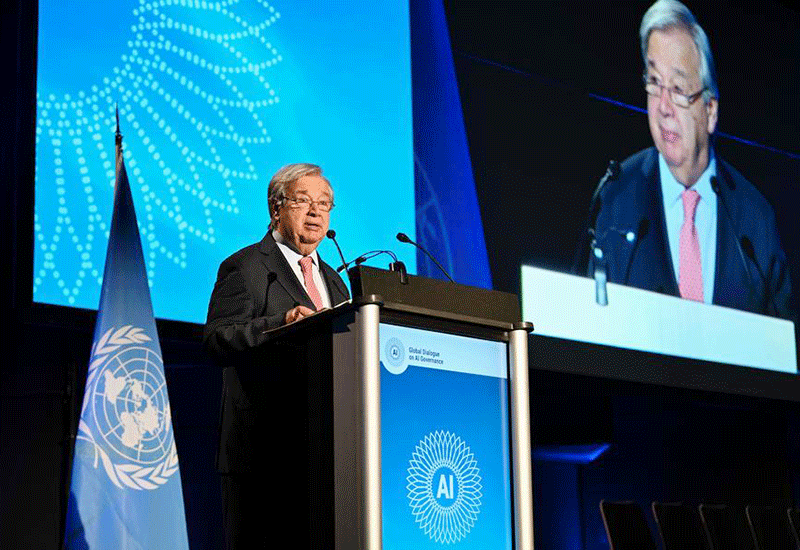
| United Nations Secretary-General Antonio Guterres speaks at the opening of the first session of the Global Dialogue on AI Governance in Geneva, Switzerland. |
Global conference calls for building inclusive, beneficial AI governance system
GENEVA (Xinhua) -- The inaugural UN Global Dialogue on AI Governance, which concluded in Geneva, Switzerland, has called for the establishment of an inclusive, beneficial, and collaborative global AI governance system.
At the opening ceremony, UN Secretary-General Antonio Guterres called for a global governance mechanism to ensure that AI benefits all of humanity, emphasising the need to provide greater access to the billions of people who remain excluded from this revolutionary technology.
Any future agreement must be “worthy of global trust” and must prioritise safety, especially the safety of children, to protect them from manipulation and abuse enabled by digital technology, he said.
The president of the UN General Assembly, Annalena Baerbock, urged collective action to address the “dark” side of AI in her remarks. She noted that reportedly 99 percent of deepfake content is sexually suggestive, with 96 percent targeting women and girls.
UN Under-Secretary-General and Special Envoy for Digital and Emerging Technologies Amandeep Singh Gill said AI is too consequential to be shaped by a few. “We need a conversation that’s global, inclusive, and grounded in evidence,” he said.
During the conference, representatives from governments, businesses, and academia stressed the importance of establishing adaptive governance frameworks, bridging the digital divide, strengthening international technological cooperation, and safeguarding human rights.
Participants also called for a shift from abstract ethics to concrete implementation, promoting the development of an inclusive, human-centered AI ecosystem.
At the conference, the Independent International Scientific Panel on AI presented a report, completed by 40 independent experts over three months, providing an assessment of the opportunities, risks, and impacts of AI development.
(Latest Update July 10, 2026) |