 |
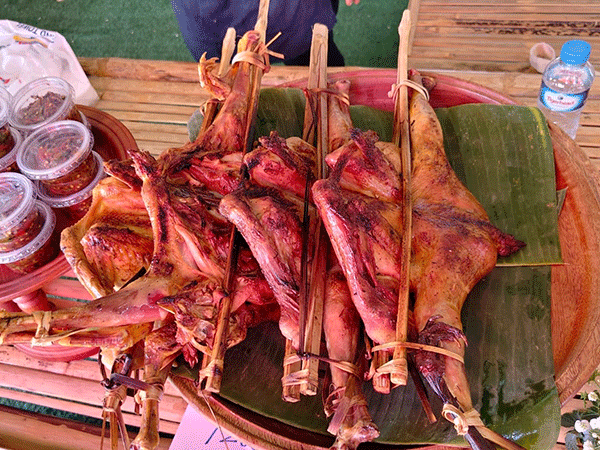
Ping Kai Xeno (Xeno grilled chicken), a staple of the region.
|
Savannakhet’s soul on a plate: A legacy beyond the festival lights
As the last of the crowds drifted away from the Lao Food Festival in Vientiane, one province’s presence continued to resonate; the Savannakhet booth did more than just serve meals, it acted as a cultural sanctuary, offering a sensory journey into the heart of southern Laos.
At the helm of this vibrant showcase was Ms Saysamone Inthichack, the President of the Savannakhet Businesswomen’s Association.
A tireless guardian of her heritage, she led a delegation of women whose mission was to prove that Savannakhet’s identity is woven as much through its ancient looms as it is simmered in its kitchens.
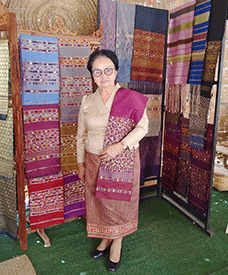 |
Ms Saysamone Inthichack, President of the Savannakhet Businesswomen’s Association.
|
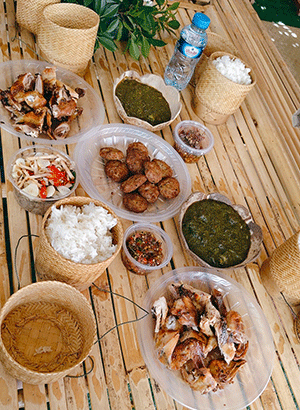 |
The signature dishes of Savannakhet province.
|
The initial lure for any passerby was the unmistakable, smoky aroma of Ping Kai Xeno (Xeno grilled chicken). The free-range chicken, marinated in a special blend of local herbs and grilled to golden perfection, is a staple of the region. However, for Ms Saysamone, the true jewel of their culinary display was the kaeng khelek (bitter leaf soup).
“This is not merely a dish; it is a recipe that has remained untouched for 40 years,” Ms Saysamone said.
To ensure the authenticity of the flavour, every ingredient was sourced and prepared in Savannakhet before making the long journey to Vientiane.
The soup is a balance of bitterness and rich umami, achieved by simmering buffalo skin and pork bones for hours until the broth becomes velvety and deep. The response from the capital’s foodies was nothing short of a frenzy; the largest pots were scraped clean well before the sun set over the Mekong.
Alongside the soup sat the mam (fermented meat) and mam paeng, prepared with traditional fermentation methods that deliver that signature southern tang—a sharp, nostalgic reminder of home for many visitors.
While the food nourished the body, the handicraft section of the booth nourished the soul. This year, the spotlight shone brightly on the exquisite silk and cotton weavings of the Phutai ethnic group from Vilabouly district.
The Phutai weavers of Vilabouly are renowned for their mastery of ‘phaen phae’ textiles. To the Phutai people, weaving is not merely a craft but a special language used to record their history and beliefs.
These textiles are unique, distinguished by the use of entirely natural dyes extracted from the barks, leaves, and roots found in the lush forests of Savannakhet. The resulting palette is earthy and timeless, possessing a depth that synthetic dyes can never replicate.
The intricate patterns on the Phutai silks are “wearable pieces of history”, passed down through oral tradition and manual precision from mother to daughter. Each thread represents the resilience of rural artisans.
“We brought these Phutai weavings to Vientiane to enable the younger generation to recognise the genius of our rural sisters,” Ms Saysamone said. “In a world of fast fashion, a hand-loomed Vilabouly silk stands as a testament to patience. It is fabric with a heartbeat.”
These textiles are deeply woven into the Phutai life cycle, used in everything from birth ceremonies to sacred rituals, making them much more than mere garments—they are symbols of spiritual protection and communal pride.
The logistical challenges of transporting heavy clay pots, fresh ingredients, and delicate looms from the south were significant. While prices were slightly higher to reflect these costs, the quality remained uncompromised, and the public’s appreciation was palpable.
For Ms Saysamone and her team, the success of the festival was not tallied in banknotes, but in the “dignity of representation”.
It was seen in the eyes of a young person touching Phutai silk for the first time with wonder, and in the satisfied smiles of elders finding a lost flavour in a bowl of kaeng khelek.
As the festival lights dimmed, the Savannakhet delegation stood as a shining example of how provincial pride and business acumen can go hand-in-hand. They didn’t just sell food and fabric; they shared the very essence of their forebears.
The festival may be over, but the story of Savannakhet—told through the tang of fermented meat and the rhythmic clatter of the Vilabouly looms—will continue to echo in the hearts of those who experienced it.
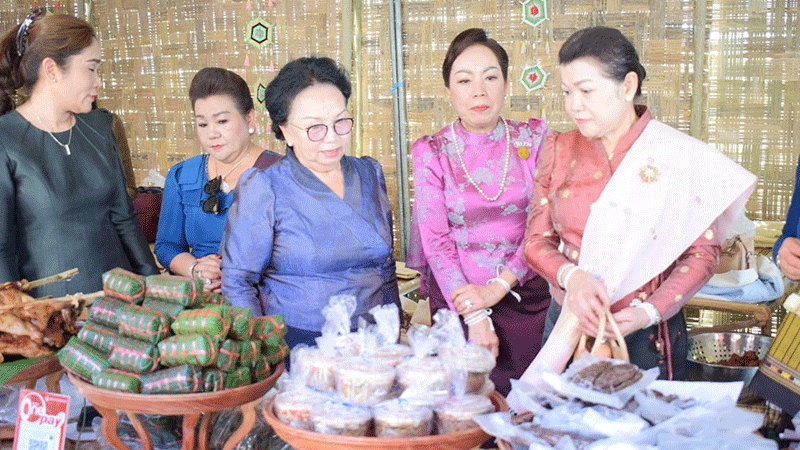 |
Visitors browse goods on display at the Savanakhet province booth at the Lao Food Festival.
|
By Lamphone Pasanthong
(Latest Update February 6, 2026)
|

