Tracing Korea’s remarkable journey through history
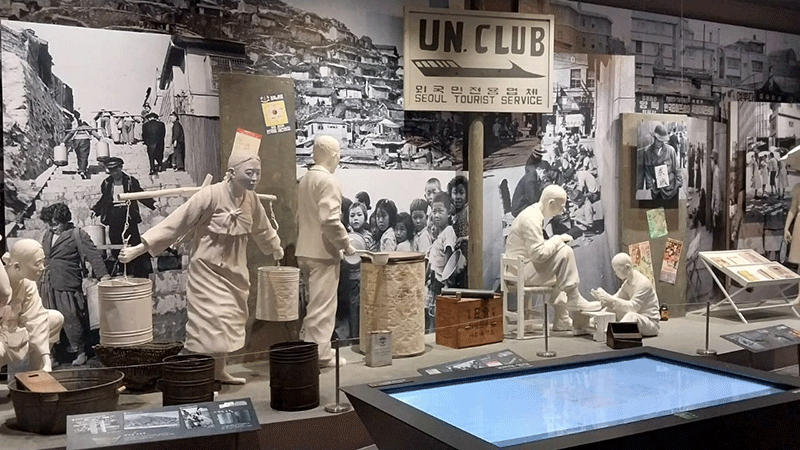
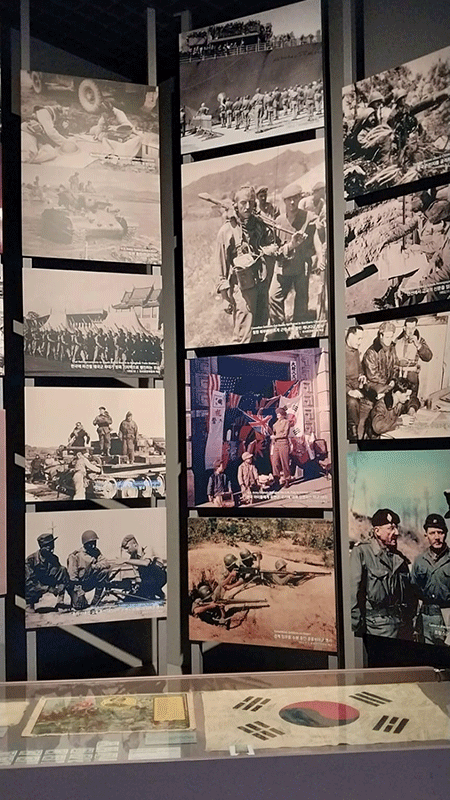
Standing before a black-and-white photograph depicting the devastation left by the Korean War, it was difficult to imagine that the country portrayed in the image would one day become one of the world’s leading economies and cultural powerhouses. Yet that extraordinary transformation is vividly documented at the National Museum of Korean Contemporary History in Seoul, one of the most memorable places I visited during a recent trip to the Republic of Korea.
 |
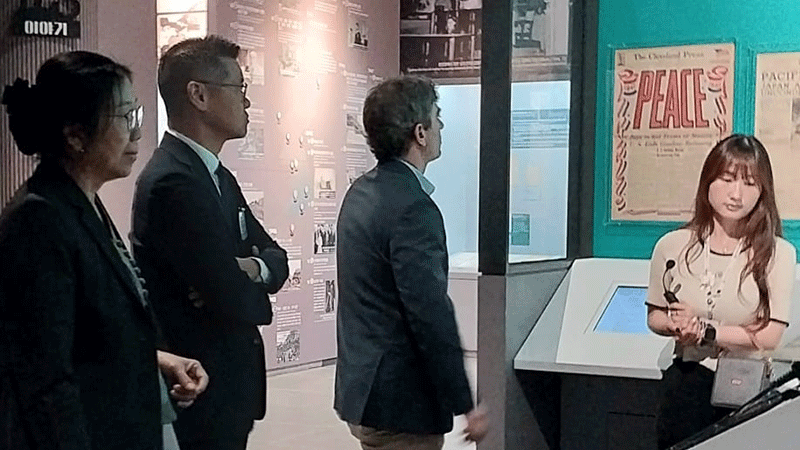
The visit formed part of the Korea Foundation’s (KF) Invitation Program, which brought together six distinguished guests from the Bolivarian Republic of Venezuela, the Kingdom of Denmark, the Lao People’s Democratic Republic, the Oriental Republic of Uruguay, the Republic of Panama, and the United States of America. I had the honour of representing Laos during the program, which took place from June 6-13.
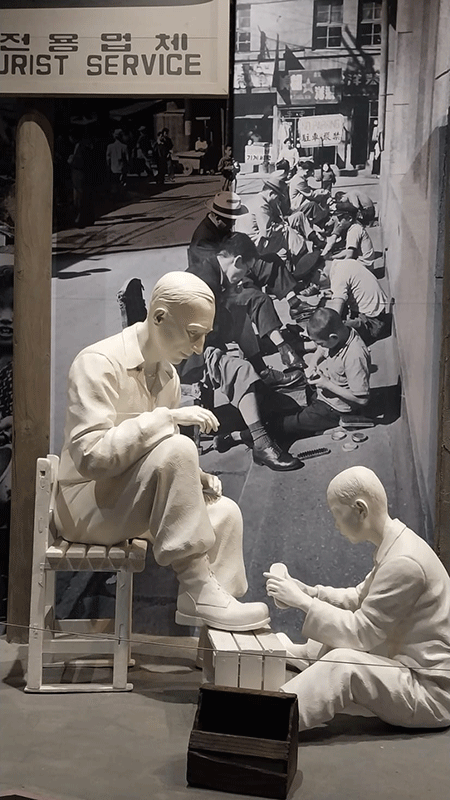
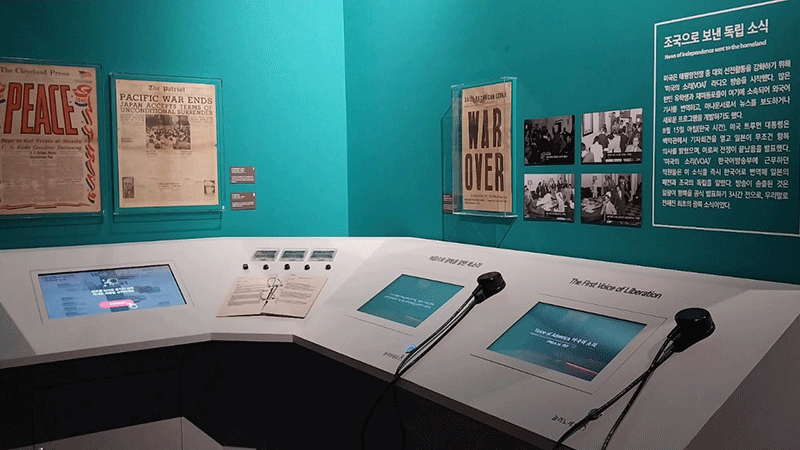
Located near Gyeongbokgung Palace in central Seoul, the National Museum of Korean Contemporary History tells the story of Korea’s remarkable journey from the late nineteenth century to the present day. Through photographs, historical documents, multimedia exhibits, and personal accounts, visitors gain insight into the challenges the nation has faced and the determination that enabled it to overcome them.
Walking through the museum’s galleries, I was particularly struck by exhibits portraying the hardships endured by ordinary Koreans during the years following the Korean War. Images of destroyed cities, displaced families, and a struggling economy paint a stark picture of a country facing immense difficulties. Yet the museum also highlights how Korea transformed itself through hard work, innovation, education, and national commitment. Today, South Korea is recognised globally for its technological achievements, dynamic economy, cultural influence, and high standard of living.
For visitors from developing countries, the museum offers more than a lesson in history. It serves as a powerful reminder that progress is possible when a nation invests in its people and remains committed to long-term development goals. The story of Korea’s transformation is one of resilience, vision, and determination.
The lessons learned inside the museum were reinforced throughout our journey across Seoul and beyond. One of the first things that impressed me about Korea was the cleanliness of its cities. Streets, public parks, subway stations, and tourist attractions were remarkably clean and well maintained. Despite being home to millions of people, Seoul feels orderly and efficient. Public transportation is modern, punctual, and convenient, allowing residents and visitors alike to travel with ease.
Equally memorable was the friendliness and courtesy of the Korean people. Whether interacting with government officials, academics, museum staff, restaurant workers, or ordinary citizens, we were consistently greeted with warmth and professionalism. Although language differences sometimes posed challenges, people were often willing to assist visitors and make them feel welcome. Such hospitality reflects Korea’s strong cultural values and contributed greatly to the positive impression left on our delegation.
Our itinerary also included visits to the iconic Gyeongbokgung Palace and several Buddhist temples. These sites revealed another side of Korea, one deeply rooted in history and tradition. Gyeongbokgung Palace, with its magnificent architecture and scenic surroundings, stands as a symbol of the Joseon Dynasty and Korea’s rich cultural heritage. In contrast, the Buddhist temples offered moments of tranquility amid the fast pace of modern life, allowing visitors to appreciate the spiritual traditions that continue to influence Korean society.
What makes Korea particularly fascinating is the way it successfully blends the old with the new. Historic palaces and temples stand alongside towering skyscrapers, advanced transportation systems, and cutting-edge technology. Traditional customs continue to be respected even as the country embraces innovation and globalisation. This harmonious coexistence of tradition and modernity is one of Korea’s defining characteristics.
Beyond cultural visits, the program included meetings with professors, researchers, and senior officials from the Ministries of Foreign Affairs and Unification. These discussions provided valuable insights into Korea’s foreign policy priorities, regional cooperation efforts, and aspirations for peace and stability on the Korean Peninsula. The exchanges also offered opportunities to learn about Korea’s experiences in economic development, education, and international engagement.
 |
Some members of our delegation travelled to Busan, Korea’s second-largest city, where they visited the Korea Institute for ASEAN Studies and the ASEAN Culture House. These institutions play an important role in strengthening ties between Korea and ASEAN countries through research, cultural exchanges, and educational programs. Their work highlights Korea’s growing commitment to cooperation with Southeast Asia.
 |
The visit was organised by the Korea Foundation, which since its establishment in 1991 has promoted international understanding through cultural exchanges, support for Korean studies, global networking initiatives, and media programs. Through its invitation program, the Foundation provides participants with opportunities to gain a deeper understanding of Korea while fostering meaningful connections among people from different countries and backgrounds. I would also like to express my sincere gratitude to the Embassy of the Republic of Korea in Vientiane for its valuable support and assistance in facilitating
 |
my participation in the program. The embassy’s professionalism, cooperation, and warm hospitality contributed greatly to making this enriching experience possible.
As our program drew to a close, I left Korea with a deeper appreciation of the country’s history, culture, and achievements. The National Museum of Korean Contemporary History offered a powerful introduction to Korea’s remarkable journey from hardship to prosperity. Beyond the museum, however, it was the country’s clean and well-organised cities, its rich cultural heritage, and the warmth of its people that brought that story to life.
More importantly, the experience demonstrated the value of international exchanges in building mutual understanding and strengthening friendships among nations. Korea’ss story is not only about economic success; it is also about resilience, vision, and the ability to preserve cultural identity while embracing change. These are lessons that resonate far beyond Korea’s borders and offer inspiration to countries around the world.
By Phon Thikeo
(Latest Update June 18, 2026)
|