 |
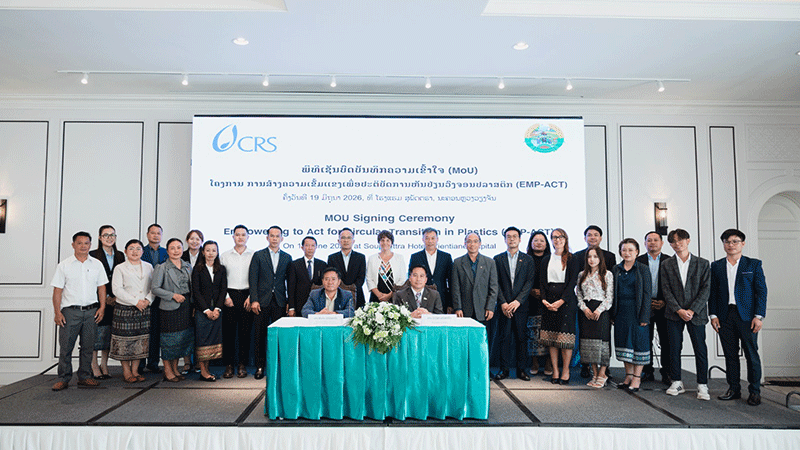
| Government officials, development partners and invited guests gather for a group photo following the signing of a Memorandum of Understanding to launch the Empowering to Act for Circular Transition in Plastics (EMP-ACT) project in Vientiane on Friday. |
Govt, EU and partners launch project to reduce plastic waste in Laos
The Lao government and its development partners have launched a new initiative aimed at reducing plastic waste and promoting greener economic growth in Laos, with pilot activities to be implemented in Khammuan and Savannakhet provinces.
To support implementation of the programme, the Ministry of Agriculture and Environment, the Provincial Departments of Agriculture and Environment of Savannakhet and Khammuan provinces, and Catholic Relief Services (CRS) on Friday signed a Memorandum of Understanding (MoU) to launch the project.
The project, known as Empowering to Act for Circular Transition in Plastics (EMP-ACT), is funded by the European Union through its SWITCH-Asia Programme and supports the implementation of Laos’ Green Growth Strategy and National Plastic Action Plan (NPAP) 2024-2030.
Over the next four years, the project will support more than 21,656 consumers and 12,800 young people in adopting sustainable practices, while helping 30 micro, small and medium-sized enterprises (MSMEs) transition to plastic-free business operations.
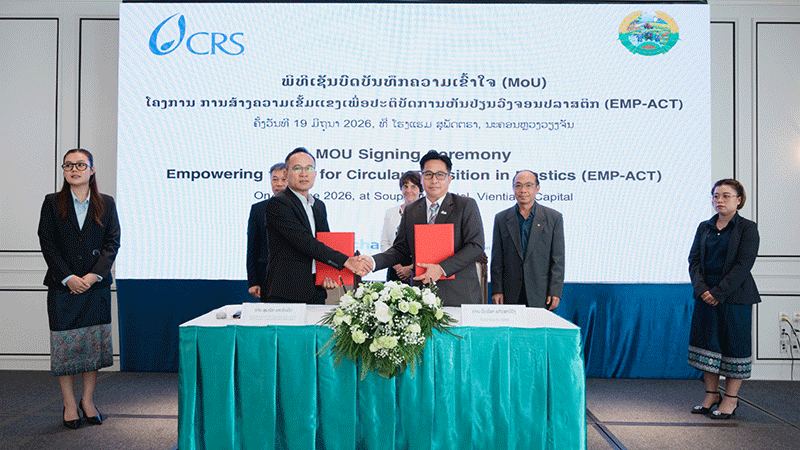 |
| Deputy Head of the Department of Agriculture and Environment of Savannakhet province, Mr Souphalack Ardbundith (left ), and CRS Country Manager Mr Vatvisa Keosalivong shake hands following the signing ceremony. |
A major component of the project focuses on public awareness and behavioural change. Through schools, universities, youth groups and community outreach activities, EMP-ACT will promote responsible consumption habits and raise awareness of the environmental impacts of single-use plastics.
The project will also strengthen municipal waste management systems, establish 12 community recycling banks and develop two circular economy demonstration centres in the two target provinces. In addition, 30 MSMEs operating in the food and tourism sectors will receive support to adopt environmentally friendly practices and obtain green certification.
Speaking at the launch ceremony in Vientiane, Deputy Head of the Department of Agriculture and Environment of Savannakhet province, Mr Souphalack Ardbundith, said the project represented an important contribution to implementing the National Plastic Action Plan and addressing growing concerns over plastic pollution.
He noted that Kaysone Phomvihane City generates about 50-60 tonnes of waste each day, with plastic accounting for an estimated 12-15 percent. Much of this plastic waste is not recycled and can end up being burned or released into waterways, causing long-term environmental damage.
In Savannakhet, the project will focus on six villages in Kaysone Phomvihane City, supporting awareness campaigns, community recycling initiatives, waste management improvements and environmentally friendly business practices.
Deputy Head of the Department of Agriculture and Environment of Khammuan province, Mr Siphathay Phaophongsavath, said the project would help translate national commitments into practical action at the local level.
He said activities in Khammuan would focus on six villages in Thakhek district and would include public education programmes, improved waste management systems and support for local businesses seeking to reduce their reliance on single-use plastics.
Representing the European Union, Mrs Veerle Smet said plastic pollution remains a major environmental challenge worldwide and in Laos, where rapid urbanisation and changing consumption patterns have contributed to rising levels of plastic waste.
She noted that studies show most plastic pollution comes from a limited number of single-use products and that less than 10 percent of plastic waste is recycled. The EMP-ACT project, she said, would support awareness and education programmes, help businesses adopt sustainable alternatives, strengthen local waste management systems and promote policy dialogue on plastic reduction.
Mrs Smet reaffirmed the European Union’s commitment to supporting Laos in its efforts to reduce plastic pollution and advance a circular economy.
CRS Country Manager Mr Vatvisa Keosalivong highlighted the importance of empowering communities, young people and businesses to take action against plastic waste.
He said the project would work with local authorities, educational institutions, youth networks, women’s groups and the private sector to promote sustainable alternatives to single-use plastics and create long-term environmental benefits.
The project is expected to contribute to reducing plastic pollution, improving waste management systems and promoting sustainable consumption and production in the two provinces while supporting Laos’ transition towards a circular economy.
By Times Reporters
(Latest Update June 23, 2026)
|

