30 Years, One column, Millions of opinions
For three decades (1996-2026), Streetwise has been more than just the most widely read column in the Vientiane Times. It has served as a platform for the voices of the people and the newspaper’s readers, a mirror of public opinion, and a witness to the changes of the times, leaving an enduring legacy in the memories of generations of readers.
What changes should the media make to bolster public appeal?
As audiences increasingly turn to digital platforms for instant news and information, the media is under growing pressure to remain credible and accessible. While the industry suffers from a meagre budget, ageing equipment, shortage of skilled personnel, and limited use of new technologies such as artificial intelligence, it continues to serve as a bridge between the government and the people. The Vientiane Times went along to the National Media Congress to ask participants about ways to address these issues, as well as improve the standard of reporting by journalists.
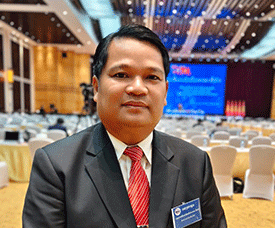 |
| Mr Singxay Vankham |
Mr Singxay Vankham, Head of the Commission for Information and Education in Luang Namtha province: I’m deeply honoured to attend the National Media Congress. This is a pivotal event to evaluate our achievements over the past 70 years and identify areas for improvement. Our goal is to ensure the media remains the voice of the Party, effectively disseminating political policies to the public while relaying people’s aspirations back to the leadership. In this 4.0 era, we must modernise both our content and reporting techniques. Luang Namtha faces significant challenges regarding technology, infrastructure, and personnel, especially since recent organisational restructuring.
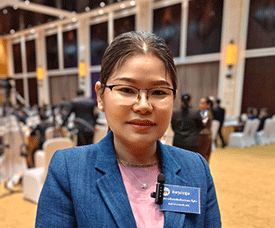
Ms Vilaphone Thongphim, Head of the Commission for Information and Education in Xayabouly province: In Xayaboury, we are trying to train personnel, keep pace with the 4.0 era, and upgrade our technical infrastructure. As Xayabouly borders on six Thai provinces, it’s essential that we expand our news delivery, particularly via our radio stations in Boten and Kaenthao districts. This ensures that people living in remote areas near the border receive accurate and full information about national developments. The media is the voice of the Party and must be able to respond to distorted narratives from ill-intentioned groups. This requires a higher level of professional skill and broader reach than is currently available.
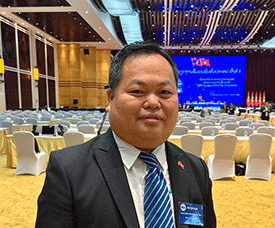
Mr Khamphousavanh Phensavath, Head of the Mass Media sector in Oudomxay province: In 76 years, this is the first conference of its kind. Oudomxay is the hub of northern Laos and hosts the regional stations for National Radio and TV. Our village loudspeakers cover nearly 90-100 percent of the province. Moving forward, we must ensure our content is concise and engaging. It is vital to integrate modern tools like AI into our daily work and ensure reporters are proficient in both theory and practical applications. As we are well aware, journalists must be able to use modern technology like AI alongside their theoretical knowledge to ensure their reporting stays relevant.
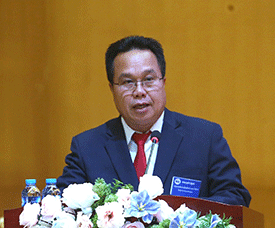 |
| Mr Thongchanh Latanapadith |
Mr Thongchanh Latanapadith, Head of the Commission for Information and Education in Luang Prabang province:
Luang Prabang’s new delivery has transitioned from traditional formats to digital platforms, including radio, television, print, and social media like Facebook, YouTube, and TikTok. This modernised content ensures faster, wider reach, especially for tourists visiting the World Heritage site.
However, we face multi-faceted challenges, particularly a shortage of multilingual content, a lack of digital skills among personnel, and limited technical equipment and operational budgets. But we are addressing these limitations and making progressive improvements to ensure we have a louder and more respected voice.
Mr Padith Vannalasamy, Head of the Commission for Information and Education in Champasak province: We have focused on professional ethics and legislation to guide our digital transformation. In Champasak, we are already using various platforms and AI. Even when using AI to create or enhance visuals, we ensure that the content is appropriate and truthful, and reflects the reality of the situation as accurately as possible. Our radio broadcasts include visuals and are accessible via apps and Facebook. Because of budget constraints and ageing equipment, our staff often use their personal phones and laptops to ensure timely reporting. Looking ahead, specialised training in filming, editing, and graphics is absolutely essential.
 |
 |
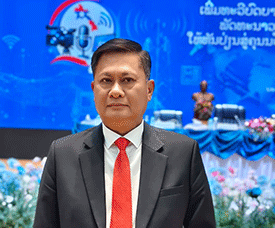 |
| Ms Vilaphone Thongphim |
Mr Khamphousavanh Phensavath |
Mr Padith Vannalasamy |
By Lamphone Pasanthong
(Latest Update July 15, 2026)
|

