 |
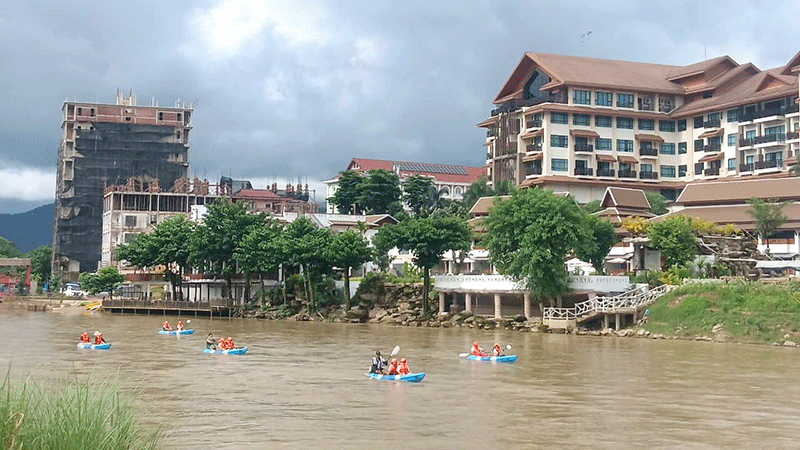
| Tourism services are a key source of revenue for the province. |
Vientiane province targets stronger growth to build self-reliant economy
Vientiane province authorities are accelerating efforts to build a self-sufficient economy by improving tax revenue collection, strengthening production and promoting the development of key sectors, aiming to achieve economic growth of 5.8 percent by the end of 2026.
Provincial authorities have identified agriculture, industry, services and investments as key drivers of growth, along with reduced reliance on external factors, while simultaneously increasing the efficiency of financial management and revenue collection.
Speaking at a meeting of the Vientiane Provincial Administration Committee, the committee’s Vice Chairman, Dr Siviengxay Oraboun, delivered a report on the progress made under the province’s socio-economic development plan for the first six months of 2026 and directions for the remainder of the year.
He reported that the province’s economy grew by 3.4 percent in the first half of this year, with agriculture expanding by 3.2 percent, industry by 2.8 percent, services by 3.8 percent, and tax and duty collection (net product) by 2.3 percent, according to the Socio-Economic Daily newspaper.
The province also amassed 922.43 billion kip in budget revenue.
For the remaining six months of 2026, provincial authorities will pursue measures to meet the 2026 economic growth target of 5.8 percent, driven by tourism, increased agricultural production, investment expansion, and infrastructure development.
The agriculture sector is expected to grow by 4.5 percent, with the focus on ensuring food security through the production of 279,749 tonnes of rice, sufficient to provide an average of 542kg per person. Increased commercial crop cultivation, livestock production, and agricultural exports will also be encouraged.
At the same time, authorities aim to issue 10,000 land title certificates.
Industry is projected to grow by 6.5 percent, with electricity generation to be increased to 1,893 gigawatt-hours and mining operations to be stepped up.
The services sector is expected to grow by 6.6 percent, with tourism identified as a priority. The province aims to attract more than 2.5 million tourists and generate tourism-related revenue of 2 trillion kip, while improving the transportation of both goods and people.
The tax and customs duty sector is targeted to grow by 4.5 percent as authorities strengthen financial management and increase the efficiency of revenue collection. Total budget revenues for the whole year are expected to reach 1,263.77 billion kip.
To improve transparency and accuracy in tax collection, the province will broaden deployment of the E-Tax Invoice system and strengthen compliance with tax obligations.
Authorities will also ensure that state, domestic and foreign funded projects are efficiently managed in compliance with the law.
The province’s efforts align with the national drive to build an independent and self-reliant economy.
In support of this, a seminar was organised by Lao and Vietnamese officials in Vientiane on Wednesday, on the topic “Self-Reliant Economy: Initiatives of the Lao PDR and Experience Lessons of the Socialist Republic of Vietnam”.
The seminar, hosted by the Lao Academy of Social and Economic Sciences, brought together Party leaders, government officials, academics and researchers to share their experiences and discuss strategies for improving economic resilience.
Participants stressed the importance of translating policies into practical action through research and evidence-based policy-making, and drew lessons from Vietnam’s four decades of economic reform.
By Times Reporters
(Latest Update August 7, 2026)
|

