 |
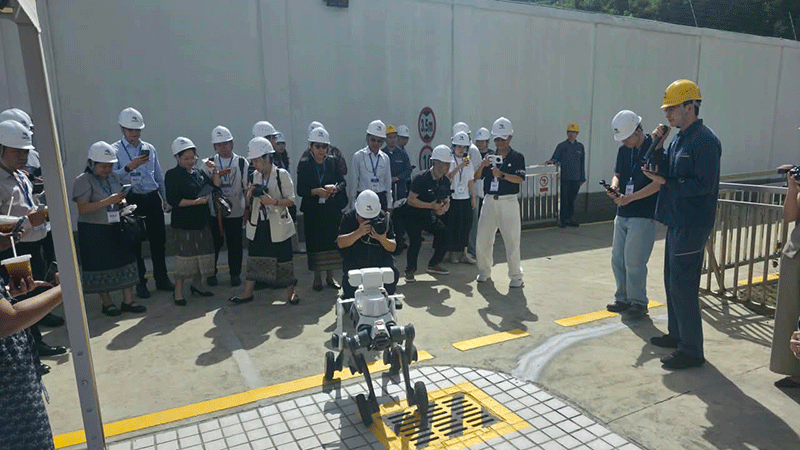
| A Vientiane Times delegation, led by Editor-in-Chief Phonesavanh Thikeo, observes a demonstration of an AI-powered quadruped robot during a visit to the CSG 220 kV Qinyun Substation in Zhuhai, part of the Asia-Pacific Media Forum itinerary. |
Robots make power grids safer, smarter
Zhuhai, China: AI-powered robots are helping power companies make electricity networks safer and smarter by using robots, drones and sensors to monitor equipment and detect faults.
A Vientiane Times delegation, led by Editor-in-Chief Phonesavanh Thikeo, and media representatives from other Asia-Pacific countries observed an AI-powered quadruped robot inspecting equipment during a visit to the China Southern Power Grid’s Qinyun 220 kilovolt Substation in Zhuhai.
The robot works as part of a smart monitoring system that combines ground-based robots, automated drones and sensors. Together, the technologies create an “air-ground” sensing network that allows engineers to monitor the substation in real time.
The system can check equipment, identify unusual conditions and help diagnose faults. This reduces the need for workers to enter potentially dangerous areas and helps engineers respond to problems more quickly.
The visit was part of the Asia-Pacific Media Forum itinerary, which introduced media representatives to developments in technology, energy and smart infrastructure in Zhuhai.
The Qinyun Substation is an important energy link between the China Southern Power Grid and the Macao power grid. Two 220-kilovolt high-voltage cables connect the substation to Macao, helping maintain a stable electricity supply.
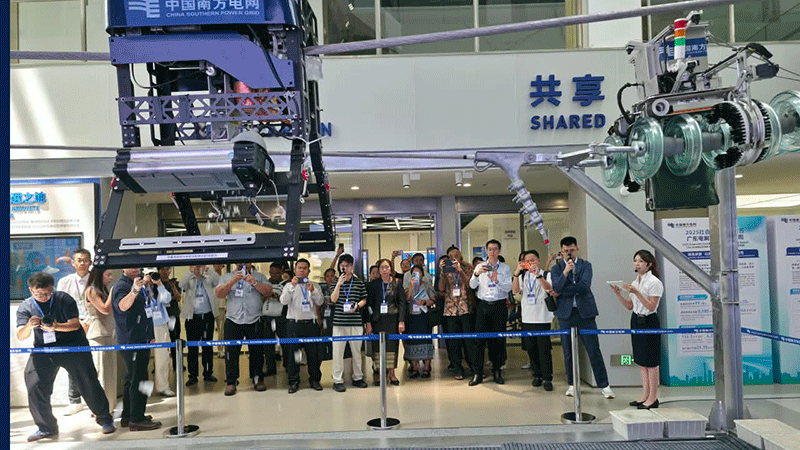
The delegation also visited the China Southern Power Grid’s Hengqin Digital Zero-Carbon Island Shared Laboratory in Zhuhai, where media representatives observed automated robots inspecting overhead transmission lines. which can move along transmission lines to inspect their condition and clear potential obstacles on the lines.
The experience also offered a glimpse of technology that could be relevant to Laos as the country expands cooperation with China in power-grid development.
 |
| Media representatives from the Asia-Pacific Media Forum, including a delegation from the Vientiane Times, observe a demonstration of automated overhead transmission line inspection robots at CSG’s Hengqin Digital Zero-Carbon Island Shared Laboratory in Zhuhai. |
Laos and China are already working together on the 500-kilovolt interconnection project, a 177.5-kilometre cross-border power line designed to transmit clean electricity, including hydropower and solar power, from northern Laos to China.
Construction of the interconnection project began on February 26, 2025, and the grid officially began operating in April this year. The project strengthens the connection between the two countries’ power systems and supports Laos’ role as a regional electricity supplier.
As cross-border power networks become more important, technologies that can monitor equipment, identify faults and improve grid safety could offer further opportunities for cooperation between Laos and China.
“If these robots are used in Laos, it would be very beneficial for human safety and saving human labour. Most importantly, it will lead to the transfer of knowledge and skills in using modern technology,” the Director General of the Pasaxon newspaper, Mr Syvanh Homsayadeth said.
For workers, the change is practical. Robots can carry out routine inspections in places where safety risks are high, while engineers can monitor the results and make decisions remotely.
The use of artificial intelligence in the power sector is part of a wider push by China to expand AI skills and cooperation with developing countries.
At the 2026 World AI Conference and High-Level Meeting on Global AI Governance in Shanghai in July, President Xi Jinping announced that China would provide 5,000 opportunities for people from developing countries to take part in AI training and seminar programmes over the next five years.
During President Thongloun Sisoulith’s visit to China in June, Beijing pledged to provide training programmes for 3,000 Lao students and professionals, and plans to increase the number of Lao nationals studying at Chinese universities to 10,000 in 2028.
The two countries also plan to set up vocational training centres, promote digital literacy, and strengthen cooperation in educational technology.
These programmes could help Laos build the skills needed to make greater use of artificial intelligence and other digital technologies as the country moves towards a more digital economy.
The link between skills development and infrastructure is becoming increasingly important. Technologies such as AI-powered inspection robots require not only advanced equipment, but also people who can operate the systems, understand the data, and respond to problems.
The visit offered the media delegation a close look at how digital technology is changing power-grid management and how investment in technology and human skills could create new opportunities for Laos as it develops its energy and digital sectors.
By Phonepaseuth Volakhoun
(Latest Update September 4, 2026)
|

