 |
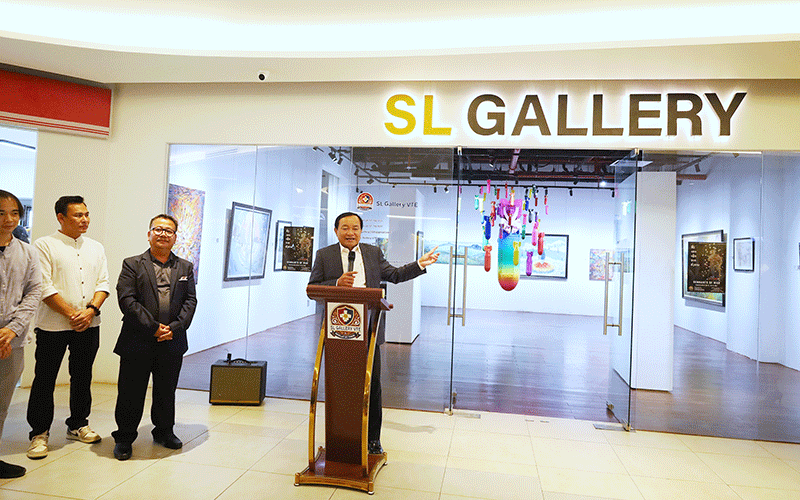
| SL Gallery VTE co-founder Mr Daovone Phachanthavong officially opens the art exhibition. |
Art exhibition recalls Laos’ wartime legacy ahead of cluster munitions conference
The painful legacy of war in Laos has been brought to life through art as the country prepares to host and chair a major international conference on cluster munitions in Vientiane.
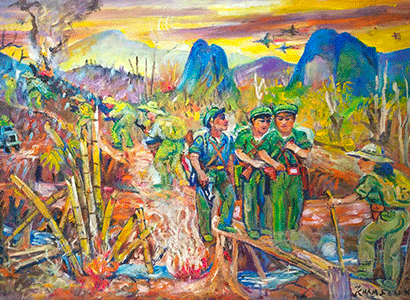
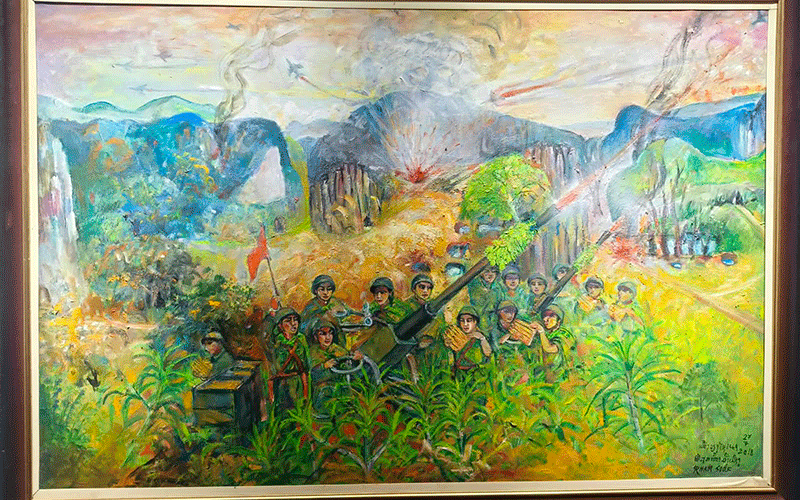
SL Gallery VTE opened its Remnants of War exhibition on Saturday, bringing together around 25 paintings by well-known Lao artists depicting unexploded ordnance (UXO), the hardships caused by war and its continuing impact on people’s lives.
Held at the Holiday Inn & Suites in central Vientiane, the exhibition, which will run until October 31, comes just before the Third Review Conference of the Convention on Cluster Munitions, which opens in Vientiane on Monday. The conference will bring together more than 500 international delegates to review progress under the Convention and strengthen global efforts towards a world free from cluster munitions.
Through paintings depicting the remnants of war and the experiences of communities affected by the war, the exhibition seeks to remind visitors that the consequences of conflict can persist for generations.
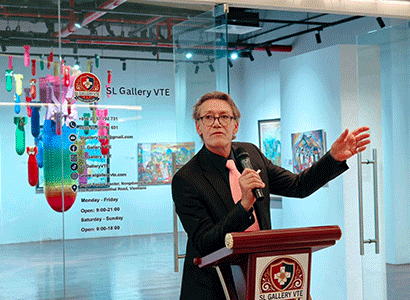 |
| SL Gallery VTE co-founder Frank Russek addresses guests at the opening of the art exhibition. |
“The artist felt heartbroken upon seeing a number of people who, while doing farm work, were injured and died from bombs still buried underground,” said Lao contemporary artist and art educator Mick Saylom, who is also SL Gallery VTE manager.
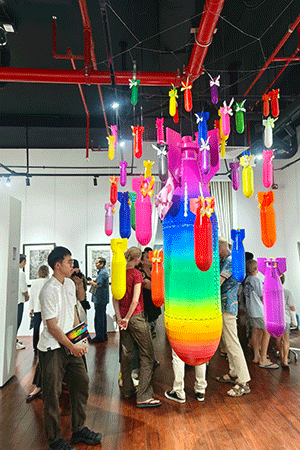
The exhibition features works by Mick and fellow Lao artists May Chandavong, Khamsouk Keomingmeuang, Hongsa Khotsouvanh, Souliya Phoumivong, Sivilay Souvannasing and Lee Sompong. Their works portray both the physical remnants of war and the hardship experienced by ordinary people during and after the conflict.
 |
For some of the artists, the subject is more than history.
Some had experienced wartime events themselves, while others had witnessed explosions that killed people. Their memories have become a source of inspiration for artworks intended to convey the human cost of war to a wider audience.
“It is a memory that we cannot forget,” Mick said, explaining that the artists created works in different forms to reflect the impact of unexploded bombs on people’s livelihoods and encourage visitors to think about the consequences of war.
The exhibition therefore carries a message that extends beyond the art gallery. By presenting Laos’ wartime experience through the eyes of local artists, it seeks to raise awareness of the dangers posed by explosive remnants of war and promote a culture of peace.
SL Gallery VTE co-founder Frank Russek said the exhibition was particularly timely as people from around the world were preparing to gather in Laos for the cluster munitions conference.
For Laos, the timing is especially significant. The country remains one of the world’s most heavily affected by unexploded ordnance left from the Second Indochina War.
Between 1964 and 1973, more than 580,000 combat flights dropped over 2 million tonnes of bombs on Lao territory. An estimated 270 million cluster munitions were dropped, making Laos the most heavily affected country in the world per capita. Around 30 percent of the cluster munitions failed to explode and remained in the ground after the war.
More than five decades after the war ended, these remnants continue to threaten lives and livelihoods, particularly in rural communities where people depend on agriculture.
President Thongloun Sisoulith, speaking earlier this year to mark 30 years of the Lao National Unexploded Ordnance Programme (UXO Lao), called for stronger national and international action to accelerate clearance and prevent further deaths and injuries. He stressed that UXO remains a serious threat to the lives and livelihoods of Lao people.
UXO clearance is also closely linked to poverty reduction and development because cleared land can be safely used for farming, infrastructure and other economic activities. Laos has incorporated UXO action into its national development planning and established Sustainable Development Goal 18, “Lives Safe from Unexploded Ordnance”, as a national goal.
Despite three decades of clearance work, the scale of the problem remains enormous.
From 1996 to February 5 this year, UXO Lao teams had deactivated more than 2 million items of ordnance, including over 1.25 million cluster munitions. Technical surveys have identified more than 254,000 hectares of hazardous areas, while UXO has been removed from more than 101,000 hectares. Since 2015, the programme has also assisted 1,850 accident survivors and conducted more than 42,000 risk education sessions.
President Thongloun has warned that, at the current pace of clearance, it could take hundreds of years to complete the work, underscoring the need for greater resource mobilisation and the use of new technologies in surveying and clearance.
 |
Against this backdrop, Laos’ chairmanship of the Third Review Conference of the Convention on Cluster Munitions provides an important opportunity to renew international attention to the country’s continuing UXO challenge.
Deputy Prime Minister and Minister of Foreign Affairs Thongsavan Phomvihane, who also chairs the National Regulatory Authority for UXO/Mine Action Sector in Laos, said the conference would allow Laos to strengthen international humanitarian cooperation and draw greater attention to its UXO problem, while mobilising additional funding, technical expertise and cooperation for clearance and victim assistance.
Laos was among the countries that supported the establishment and adoption of the Convention on Cluster Munitions and became the second country to sign and ratify it in 2008. Vientiane subsequently hosted the Convention’s First Meeting of States Parties in 2010, making the return of the Convention’s review process to Laos particularly significant.
As conference chair, Laos plans to advocate for effective implementation of the Convention, with humanitarian action and UXO clearance for development among its priorities. It will also encourage wider participation in the Convention and stronger international cooperation to address the dangers posed by cluster munitions.
The Remnants of War exhibition adds a human and artistic dimension to these international discussions. While diplomats and experts meet to discuss treaties, policies and practical measures, the paintings offer a reminder of what those discussions ultimately seek to prevent: people being injured or killed while working their land, communities living with fear and generations continuing to bear the consequences of a war that ended decades ago.
For the artists, preserving these memories is not about keeping the wounds of war alive, but about using them to promote peace.
“Looking to the future, how will we help build our world, and how will we make sure there is no more war in our country?” President Thongloun said earlier this year, reflecting on Laos’ experience with the remnants of war.
In that sense, the exhibition’s message closely echoes Laos’ broader call at the international conference: that the painful legacy of war should ultimately become a reason for stronger cooperation, greater safety and a more peaceful future free from the threat of unexploded munitions.
By Souksakhone Vaenkeo
(Latest Update September 14, 2026)
|