 |
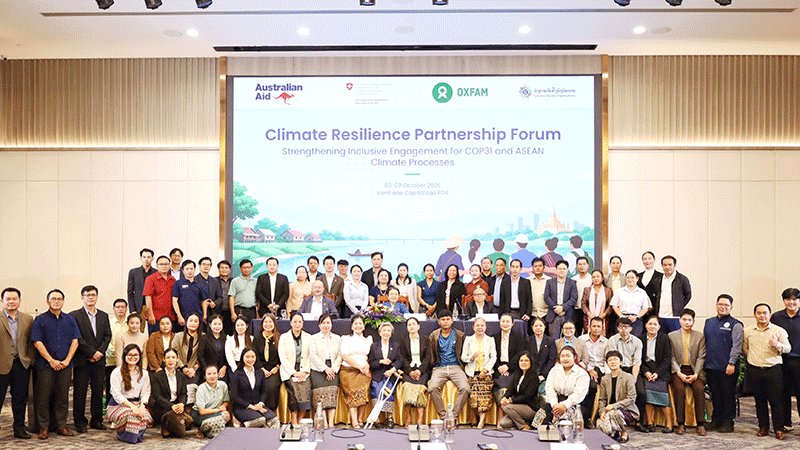
| Delegates, government representatives, civil society organisations, and development partners pose for a group photo during the forum in Vientiane. |
Civil society perspectives to support the government of Laos ahead of COP31
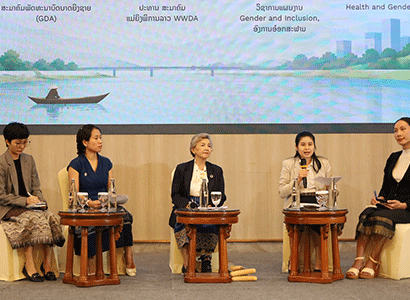
The Lao Civil Society Organisation (CSO) Coordination Committee (LCCC), in partnership with Oxfam in Laos, convened the Climate Resilience Partnership Forum at the Lao Plaza Hotel in Vientiane from October 8 to 9.
The forum, held under the Mekong Inclusive Water Governance and Climate Resilience project, aimed to strengthen inclusive engagement between civil society, government agencies, and development partners ahead of the 31st Conference of the Parties (COP31) and related ASEAN climate processes.
The initiative comes at a crucial juncture for Laos, which has faced severe climate impacts since 2024. Widespread flooding triggered by Tropical Storm Soulik and Typhoon Yagi affected more than 204,000 people across the country, causing an estimated US$279 million in damages between 2024 and 2025. Vulnerable groups—including women, children, persons with disabilities, ethnic communities, and low-income households—were disproportionately impacted.
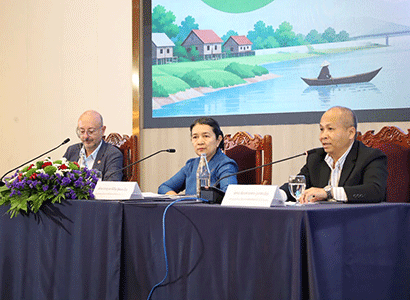
Speaking at the forum, Vice President of the LCCC, Ms Manivanh Suyavong, highlighted the urgent need for collaborative action.
“Climate change is not a distant threat; it is already affecting the lives and livelihoods of communities across Laos,” Ms Manivanh said. “This forum provides an important platform for civil society, government, and development partners to work together in identifying practical solutions and bringing local perspectives—with an explicit focus on gender equality and disability inclusion—into national and international climate discussions.”
She emphasised that as Laos prepares for COP31, the voices of vulnerable communities, particularly women, youth, and persons with disabilities, must continue to inform climate policies, decision-making, and targeted investments.
Highlighting the importance of water management and multi-stakeholder collaboration, Deputy Director of Cooperation at the Swiss Agency for Development and Cooperation (SDC) in Vientiane, Mr Andreas Gerrits, noted that water remains fundamental to sustaining agriculture, fisheries, energy systems, ecosystems, and local livelihoods.
“Building climate resilience therefore requires strong partnerships, inclusive dialogue, and the meaningful participation of civil society, whose contributions are essential to effective climate action and water governance,” Mr Gerrits stated in his opening remarks.
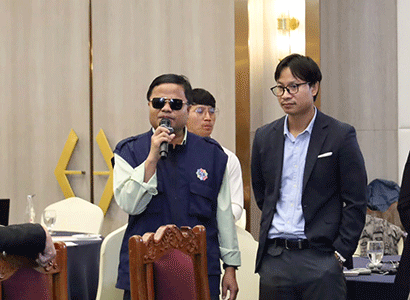
During the event, community representatives shared firsthand accounts of how climate change is affecting rural food systems and daily life.
Mr Khampheng, Deputy Head of Lard village, described the yearly challenges faced by his community of 1,331 residents, who rely on nearly 800 hectares of agricultural land. Annual flooding between June and October regularly submerges key infrastructure and roads, leaving boats as the only means of transportation.
“Through the support of the Oxfam-funded project, which helped install an early warning system and establish a Village Disaster Management Group, our preparedness has greatly improved,” Mr Khampheng said.
“When flooding occurs, we are now able to provide timely alerts to villagers and evacuate vulnerable groups in advance, helping to reduce risks and protect lives.”
He added, however, that ongoing support is essential for long-term survival, particularly resilient infrastructure, climate-resilient agriculture, and sustained investment in community-based disaster risk management.
Similarly, Ms Phonesavanh, a representative from Houy Lor village in Pak-Ou district, Luang Prabang province, voiced concerns regarding water security along the Ou River. She noted that blockage of drainage systems during the rainy season damages homes, while dry-season water shortages threaten agriculture and drinking supplies, calling for urgent infrastructure rehabilitation.
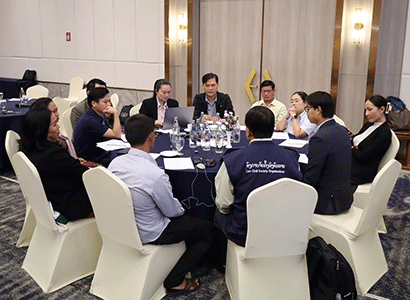
The forum brought together more than 70 stakeholders, including Civil Society Organisations, youth networks, academia, community-based organisations, women’s groups, and media representatives.
Participants reviewed, refined, and formally endorsed a unified set of recommendations to support the Lao government’s upcoming engagement at COP31 in Antalya, Türkiye.
The consultation process outlined four key national climate priorities, namely climate finance by improving equitable and direct access to climate finance for adaptation, resilience, and loss and damage; locally led action by increasing investment in locally led adaptation, water security, ecosystem restoration, and climate-resilient livelihoods; carbon markets and Article 6 to ensure environmental integrity, social safeguards, and fair benefit-sharing in carbon market mechanisms; and inclusive governance such as advancing inclusive climate decision-making that empowers women, youth, indigenous peoples, ethnic communities, and persons with disabilities.
The forum concluded with an agreement on a practical advocacy roadmap outlining key actions and coordination mechanisms in the lead-up to COP31, ensuring that frontline communities remain at the centre of Laos’ transition towards a climate-resilient future.
The Climate Resilience Partnership Forum was supported by the Australian Department of Foreign Affairs and Trade (DFAT) and the Swiss Agency for Development and Cooperation (SDC) through Phase 3 of the Oxfam Inclusive Mekong Water Governance and Climate Resilience project (IP-3).
By Times Reporters
(Latest Update October 15, 2026)
|