 |
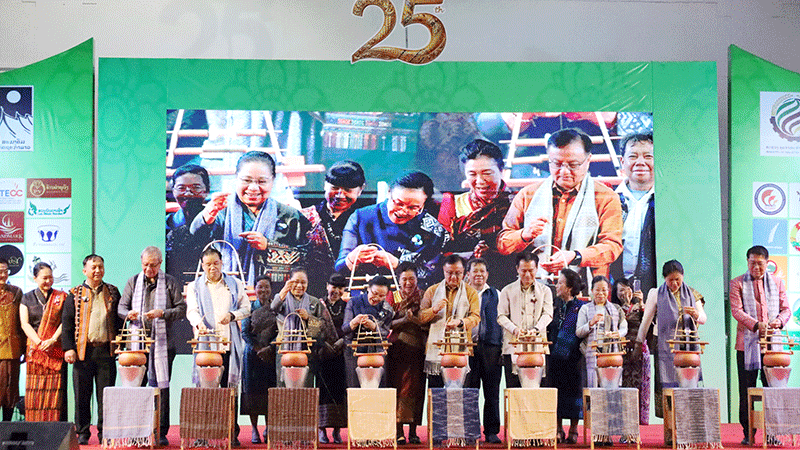
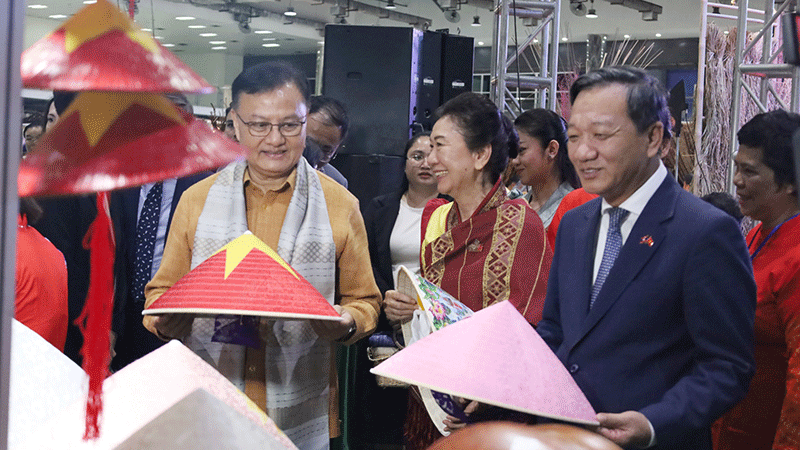
Deputy Prime Minister Santiphab Phomvihane attends the opening ceremony of the 25th Lao Handicraft Festival on Monday. -- Photos Bounfaeng Phaymanivong
|
Lao Handicraft Festival celebrates 25 years of promoting artisanal skills
The 25th Lao Handicraft Festival opened in Vientiane on Monday, bringing together artisans, businesses and exhibitors from Laos and other countries in the region to promote traditional crafts, expand market opportunities and preserve Laos’ cultural heritage.
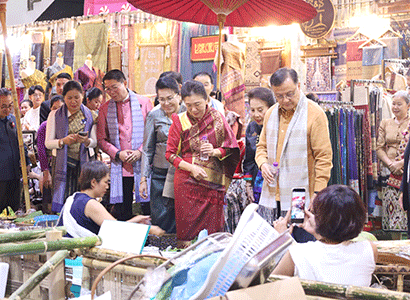
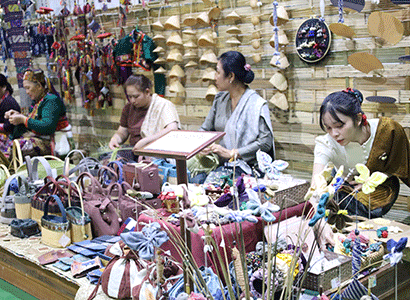
The nine-day festival, running until November 8 at Lao-ITECC, features more than 200 exhibition and sales booths, with participation from all 17 provinces and Vientiane, as well as exhibitors from Vietnam, Myanmar, Thailand and Japan.
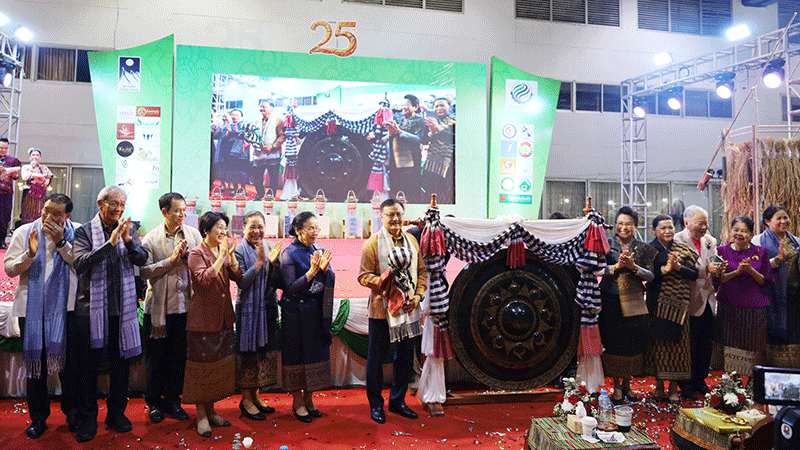
The event was officially opened by Minister of Industry and Commerce Mr Malaithong Kommasith in the presence of Deputy Prime Minister Santiphab Phomvihane, the President’s wife Mrs Naly Sisoulith, who is Chair of the Advisory Board of the Lao Handicraft Association, and other senior officials and invited guests.
 |
 |
| |
|
Taking place under the slogan “Fine Handiwork Is a Paradise of Tourism; 25 Years of Growth, Weaving the Threads of Wisdom, Elevating the Value of Lao Handicrafts towards World Heritage”, the festival provides a platform for artisans and businesses to showcase their products, share experiences, establish business partnerships and expand their markets.
Speaking at the opening ceremony, Mr Malaithong said handicrafts were more than commercial products, representing the country's cultural wealth, history and traditional skills passed down through numerous generations.
He said the Party and government had supported the sector through policies and the Law on Handicrafts, alongside measures covering access to capital, taxation, product protection and skills development. These efforts aim to create jobs, boost incomes, reduce poverty and preserve traditional craftsmanship.
Over the past 25 years, the festival has expanded from just 10 stalls displaying handicrafts in a field in 2002 to more than 200 stalls in an air-conditioned exhibition hall this year, encouraging artisans to improve product quality and opening doors to more local and international markets, the Honorary President of the Lao Handicraft Association, Mrs Chanthao Pathammavong, said.
 |
 |
The festival programme features live demonstrations of weaving, silk reeling, cotton spinning, silver beating, basketry, pottery and wood carving.
One of this year's new attractions is the Lao Handicraft Pageant, organised with the Lao People's Revolutionary Youth Union to select young women as cultural ambassadors to promote traditional crafts, Lao clothing and local ways of life, with a focus on the younger generation.
Other events include an old-style market featuring local products and food, talks on handicraft development, a competition recognising outstanding handicraft products, and a charity fashion show featuring traditional ethnic costumes scheduled for November 6.
The festival also provides recognition for master artisans in textiles, basketry and silverware, highlighting their contribution to the preservation of traditional knowledge and craftsmanship.
However, Mrs Chanthao noted that some traditional crafts, including pottery, were in decline because these skills were not being passed on to younger generations. Limited funding for provincial artisans and the copying of traditional textile patterns for mass production were also among the challenges facing local producers.
Mr Malaithong called on all sectors of society to support locally made products, saying that purchasing Lao handicrafts helped sustain rural livelihoods, create opportunities for women and contribute to poverty reduction and grassroots economic development.
The festival's popularity reflects the growing interest in traditional crafts and attempts to ensure these skills do not die out. The government has designated November 1 as Lao Handicraft Day, to recognise the contribution of artisans and promote the country's handicraft heritage.
This year’s fair marks a quarter-century of efforts to connect traditional skills with market opportunities while encouraging successive generations to preserve Laos' cultural heritage.
By Bounfaeng Phaymanivong
(Latest Update November 3, 2026)
|

