 |
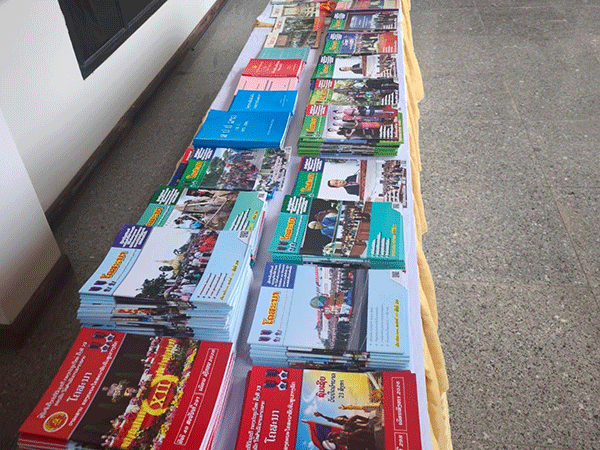
Books published by the Public Relations Department.
|
Propaganda Magazine marks 40 years with call for digital transformation
The Propaganda Magazine (Varasan Khosana), published by the Commission for Information and Education of the Lao People’s Revolutionary Party Central Committee, marked its 40th anniversary on October 28, with a call for editors and editorial teams to improve the quality of journalism, attract younger readers, and accelerate digital transformation.
Speaking at the anniversary event, Politburo member and Head of the Commission for Information and Education of the Central Committee, Mr Khamphan Pheuyavong, called on magazine editors to ensure their staff become skilled, responsible and professional media practitioners capable of meeting the demands of the changing media landscape.
 |
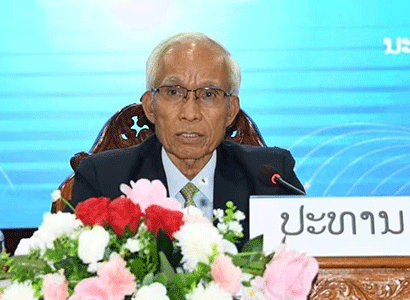 |
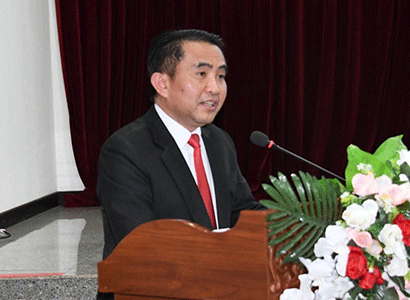
| Director General of the Public Relations Department of the Commission for Information and Education of the Central Committee, Mr Boualay Phanouvong. |
Politburo member and Head of the Commission for Information and Education of the Central Committee, Mr Khamphan Pheuyavong, addresses the magazine’s anniversary celebration. |
He stressed the need to improve the quality of editorial content by presenting accurate, credible and relevant information from diverse perspectives, while ensuring that articles are informative, accessible and engaging to readers.
Mr Khamphan also highlighted the importance of attracting younger audiences, noting that their reading habits are changing as digital platforms and social media become increasingly important sources of information.
He urged editorial teams to explore new approaches to presenting content, make use of modern technologies, strengthen multimedia production, and improve visual presentation while maintaining professional standards, credibility and the educational value of their publications.
He further encouraged editors and reporters to share their knowledge and experiences, encourage good practices and strengthen cooperation to foster innovation and improve the overall quality of magazine publishing.
Addressing the challenge of misinformation, Mr Khamphan called on media organisations to respond promptly and appropriately to false news and misleading information by verifying facts and providing accurate, timely and reliable reporting.
He said magazines should go beyond the production and publication of content to include building professional capacity, embracing digital innovation and ensuring that publications effectively serve the Party, the nation and the people.
“Our goal is to create magazines that are professional, credible, modern, innovative and attractive to readers of all generations, particularly young people, while contributing to national development and the advancement of society,” he said.
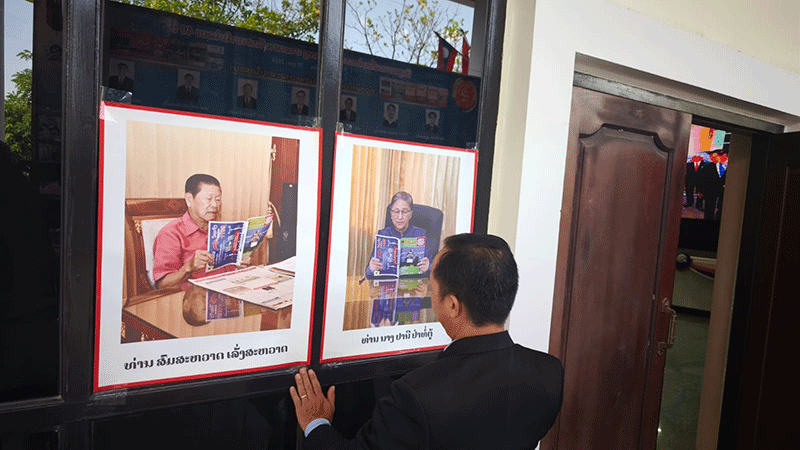 |
A man looks at photos of former Party and state leaders reading the Propaganda Magazine.
|
Four decades of development
Director General of the Public Relations Department of the Commission for Information and Education of the Central Committee, Mr Boualay Phanouvong, summarised the magazine’s history, saying its establishment was authorised by a resolution passed by the Secretariat of the Party Central Committee 40 years ago.
The magazine was officially established on October 28, 1986, under the name Propaganda Magazine (Varasan Khosana). It operates under the direct leadership and guidance of the Commission for Information and Education of the Central Committee.
Initially, the publication served as a handbook for lecturers and oral propagandists, providing guidance on the Party’s policies, as well as state laws and regulations. It also shared lessons and experiences from different sectors, reported on the implementation of Party policies and covered significant domestic and international developments.
Its establishment marked an important development in Laos’ media sector and political and ideological education, at a time when the Party, armed forces and people were working towards the goals of the Fourth Party Congress.
The Commission was tasked with establishing the magazine’s organisational structure, guiding its editorial direction and ensuring the necessary conditions for regular publication and the timely release of issues.
Over the past four decades, the magazine has passed through four main phases, reflecting changes in its organisational structure, publication format and editorial responsibilities.
The first phase, from 1986 to 1997, was the magazine’s establishment period. It operated as a division under the Department of Public Relations, with six staff members. Published quarterly, it had an initial print run of 5,000 copies. The first issue was released in December 1986.
The second phase, from 1997 to 2012, saw changes to the magazine’s content and format to better meet the requirements of political and ideological education. Its dimensions increased from 13x19 centimetres to 18.5x26 centimetres, with 50 pages per issue. It was published every two months, with a print run of 1,500 copies, and distributed to Party committees, information and education committees at various levels, lecturers, and grassroots oral propagandists.
The third phase, from 2013 to 2022, aimed to restructure the editorial board and improve the quality of information and education work. Following the 2013 nationwide annual conference on information and education work, the magazine reorganised its editorial functions into three divisions: Political Editorial, Socio-Economic Editorial, and Layout and Publication.
The fourth phase began in late 2022, when the editorial board was integrated into the Department of Public Relations in line with an order from the Secretariat of the Party Central Committee on restructuring organisational bodies within ministries, organisations and local authorities.
In 2023, the magazine’s print run was reduced from 2,000 to 1,300 copies per issue.
Recognition and future priorities
Mr Boualay said the magazine’s steady development over the past 40 years had been supported by the continued leadership and guidance of the Party Committee and the Commission.
In recognition of its achievements, the magazine received a Second-Class Labour Medal from the government to mark its 20th anniversary.
It was awarded another Second-Class Labour Medal for its outstanding performance in information and education work during the years 2010 to 2015. Individuals who made significant contributions to the magazine’s development have also received commendations.
As the publication enters its fifth decade, the anniversary serves as an opportunity to reflect on its achievements while addressing the challenges facing traditional media in an increasingly digital environment.
The priorities outlined at the anniversary event include strengthening professional skills, improving editorial quality, making content more attractive to younger generations, modernising production methods, and responding effectively to misinformation.
These efforts are intended to ensure that the magazine continues to fulfil its role in political and ideological education while adapting to changing audience expectations and developments in modern journalism.
By Times Reporters
(Latest Update November 4, 2026)
|

