 |
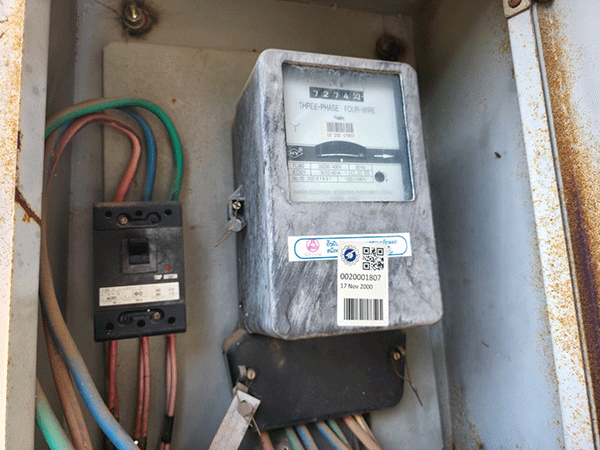
An electricity meter records power consumption.
|
10 percent electricity VAT waived for 300kWh users
The government has begun exempting households that use no more than 300 kilowatt-hours of electricity a month from the 10 percent value-added tax (VAT), easing pressure on family budgets.
The measure applies nationwide from the September 2026 billing cycle, covering electricity consumed in August, and will continue until December 2029, according to a notice issued by Electricité du Laos (EDL).
The policy could benefit a large proportion of residential electricity customers. An infographic published by EDL indicates that 83 percent of residential customers use between zero and 300 kilowatt-hours (kWh) of electricity a month.
This means most residential customers fall within the consumption threshold set for the exemption, although the figure does not establish how many households are actually receiving VAT relief.
The exemption is part of the government’s efforts to ease living costs, particularly for low-income families facing financial difficulties.
The National Assembly Standing Committee approved the policy in September, following a government proposal submitted on May 28.
The resolution provides for an exemption from certain provisions of the Law on Value-Added Tax relating to residential electricity charges for low-income citizens whose electricity consumption does not exceed 300 kWh.
According to EDL’s notice, households consuming up to 300 kWh per month will not pay the 10 percent tax on their eligible electricity charges. However, maintenance fees will remain subject to VAT under existing regulations.
For households, the exemption means a reduction in the tax added to their electricity bills rather than a cut in the electricity tariff itself.
For example, a household with eligible electricity charges of 100,000 kip would save 10,000 kip in VAT, but the actual amount saved will depend on the household’s electricity consumption and charges. Beyond reducing household bills, the policy will also affect government tax revenue.
Under the National Assembly resolution, the government must direct the Ministry of Finance, the Ministry of Industry and Commerce, the Bank of the Lao PDR and EDL to coordinate the policy.
These agencies must establish consistent methods for calculating the VAT revenue lost and identify alternative revenue sources during the exemption period.
However, no official estimate of the amount of tax revenue the government expects to lose under the policy has been disclosed. The National Assembly resolution also does not specify the projected financial impact on the state budget.
The resolution also requires EDL to strengthen inspections of electricity consumption and ensure meters are installed and operated according to technical standards.
It specifically prohibits the approval of multiple electricity meters for a single household, a measure intended to support proper oversight of the subsidy.
The State Audit Organisation, the State Inspection Authority and relevant National Assembly committees have also been assigned to monitor implementation of the policy.
The government must submit periodic reports to the National Assembly Standing Committee. With the exemption scheduled to continue until the end of 2029, the measure offers tax relief to qualifying residential consumers while leaving the government to balance household support with the need to maintain sufficient levels of state revenue.
By Phonepaseuth Volakhoun
(Latest Update November 18, 2026)
|

