 |
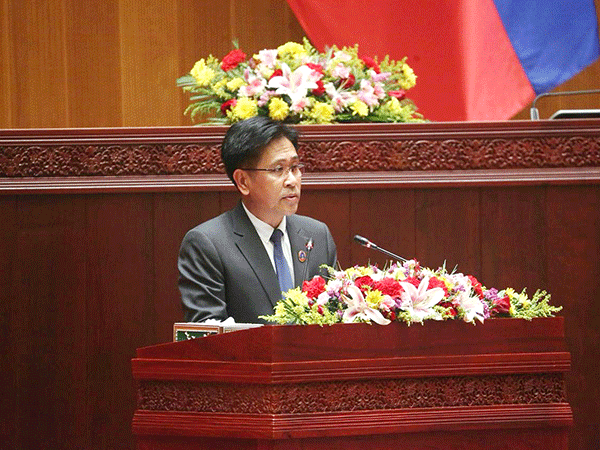
| President of the Supreme People’s Court, Mr Phayvy Sybualypha, addresses the inaugural session of the 10th National Assembly in Vientiane on March 24. |
Courts aim to improve transparency, case handling
The Supreme People’s Court has laid out plans to improve transparency, speed and fairness in case handling under its five-year Work Plan for 2026-2030.
President of the Supreme People’s Court, Mr Phayvy Sybualypha, presented the plan at the inaugural session of the 10th National Assembly on March 24, chaired by the Vice President of the National Assembly, Dr Sounthone Xayachack.
Mr Phayvy said the courts had made solid progress over the past five years, improving case management and enabling hearings to be conducted more quickly, thoroughly and fairly.
He said judges and court staff strengthened their ethics, professional conduct and legal knowledge, while the expansion of district courts helped bring justice services closer to the public.
Building on this progress, the new plan sets clear and measurable targets. The Supreme People’s Court aims to resolve at least 90 percent of criminal cases, 86 percent of family, child, labour and administrative cases, and 76 percent of civil and commercial cases.
At the same time, appeal rates are expected to remain below 15 percent, while efforts will be made to improve public confidence in court rulings and reduce requests to overturn decisions.
A key focus of the plan is to create a more transparent case management system, ensuring that each stage of proceedings can be clearly reviewed and trusted by the public.
To improve access to justice, at least six new district courts will be established in Champasak, Savannakhet, Khammuan, Huaphan and Luang Namtha provinces. Court structures will also be streamlined to make operations more efficient and suited to local conditions.
The development of human resources remains central to the reform. The court aims for at least 85 percent of judges to be rated as good and proficient, with continued training to strengthen their ethics, legal expertise and decision-making skills.
In addition, the Supreme People’s Court will draft and revise four key laws, including those on juvenile proceedings, court fees, administrative procedures and the Law on People’s Courts. At least 10 supporting regulations will be issued each year.
Members of the National Assembly Standing Committee welcomed the plan’s clear structure, which includes detailed programmes, projects and timelines, but stressed the need for strong follow-up.
They called on court leaders and staff to apply Party policies and national development plans in their daily work, while ensuring strict compliance with the law.
The committee also emphasised the importance of protecting the rights of all parties in a case, ensuring that hearings are fair, open and based on clear evidence.
Greater coordination with relevant sectors was highlighted as essential to ensure cases are handled smoothly and promptly, helping to build stronger public trust in the justice system.
By Times Reporters
(Latest Update March 26, 2026)
|

