 |
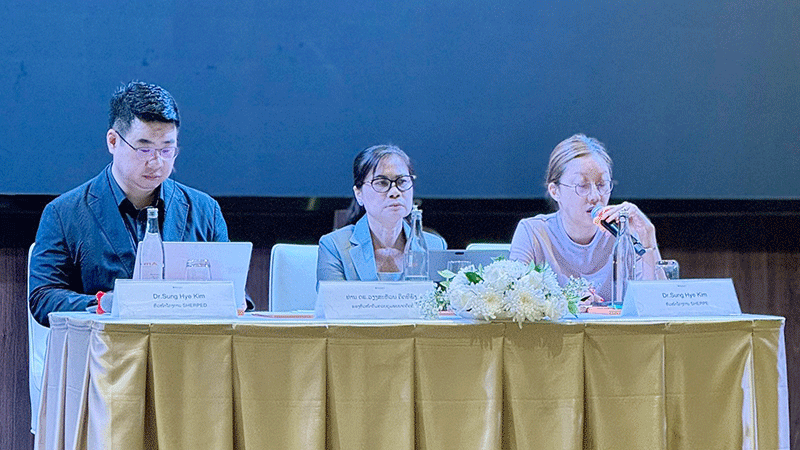
| (From left) Dr Bryan Inho Kim, Dr Viengsavanh Kitthiphong, and Dr Sung Hye Kim co-chair the health meeting in Vientiane this week. |
Laos, S.Korea conducts first emerging inpectious disease response exercise
Medical staff and health officials from Laos and the Republic of Korea are working together to strengthen Laos’ emerging infectious disease response.
As part of these efforts, a full-day Tabletop Exercise on Middle East Respiratory Syndrome(MERS) involving personnel from the two countries, was hosted by the Ministry of Health, through its Department of Communicable Disease Control and the National Centre for Laboratory and Epidemiology.
The exercise was supported by the Korea Disease Control and Prevention Agency (KDCA) and implemented in partnership with Hanyang University College of Medicine under the Strengthening Health Emergencies Preparedness and Enhancing Response to Disease Outbreaks (SHEPERD) project.
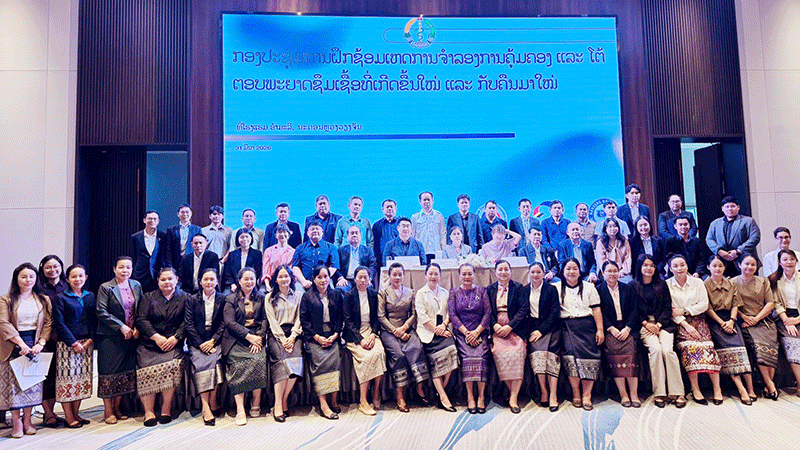 |
Health officials from Laos and the Republic of Korea gather for a photo at the Tabletop Exercise. |
A historic first in health diplomacy
This initiative represents the first bilateral public health emergency preparedness exercise between the two nations. It is the result of nearly a year of collaborative planning, including scenario co-development during a visit by Lao Ministry of Health officials to the Republic of Korea in April 2025.
The drill brought together more than 50 participants from over 15 Lao government ministries and institutions, including the ministries of Education and Sports, Foreign Affairs, Defence, Public Security, Finance, Public Works and Transport, and Culture and Tourism.
Healthcare facilities ranging from national referral hospitals to district health centres were also represented, signalling a new era of health security cooperation.
Leveraging international expertise
The Republic of Korea is globally recognised for its robust infectious disease response system, developed following the 2015 Middle East Respiratory Syndrome (MERS) outbreak. These lessons formed the backbone of the Tabletop Exercise scenarios, allowing Lao participants to benchmark their own systems against international standards.
Deputy Sicientific Director of the KDCA, Dr Bryan Inho Kim, said: “Infectious diseases do not respect borders. This exercise creates an important opportunity for Laos to review its crisis response systems and communication channels—and to draw lessons that will make our response more effective when the next pandemic comes.”
Strengthening front-line capacity
Deputy Director of the Department of Communicable Disease Control at the Ministry of Health, Dr Viengsavanh Kitthiphong, said the COVID-19 pandemic highlighted the importance of front-line capacity.
“This exercise strengthens cooperation across health, agriculture, education, and beyond—so we can build a swift, unified response plan,” she said.
Hanyang University College of Medicine and SHEPERD Project Manager, Prof. Sung Hye Kim, added: “After nearly a year of joint preparation, we see this exercise as a major milestone in strengthening bilateral cooperation and building Laos’ capacity to detect and respond to infectious disease threats.”
About the SHEPERD project
The SHEPERD project is a bilateral official development cooperation initiative between the Republic of Korea and Laos.
Implemented by Hanyang University College of Medicine with support from the KDCA, the project aims to enhance Laos’ capacity to detect, investigate, and respond to emerging infectious diseases and public health emergencies.
By Advertorial Desk
(Latest UpdateApril 7, 2026)
|

