 |
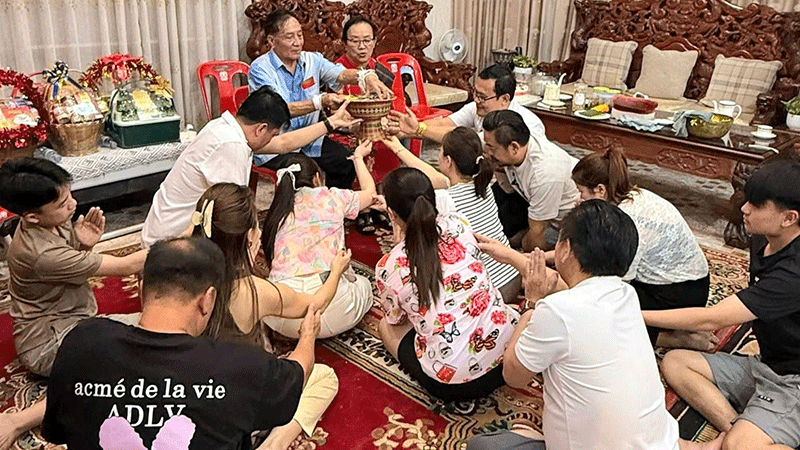
| During Pi Mai Lao, young people perform the Somma ceremony to express respect and gratitude to their parents and elders. -- Photo Phonemaly |
Pi Mai Lao: A season of renewal, gratitude and forgiveness
Beneath the laughter, water splashes and vibrant celebrations of Pi Mai Lao, a quieter, more meaningful tradition unfolds within Lao homes—one centred on gratitude, forgiveness and renewal.
Lao New Year is not only a time to celebrate the passing of the old year, but also a deeply personal moment for families to reconnect. Sons and daughters return home bearing not just gifts, but intentions—to express appreciation, seek forgiveness and begin anew with the blessings of their elders.
At the heart of this tradition is the Somma ceremony, a ritual that reflects the essence of Lao family values. Typically observed on April 16, the final day of Pi Mai Lao, Somma provides an opportunity for younger family members to formally pay respect to parents and elders. However, in today’s fast-moving world, many families choose to hold the ceremony earlier, ensuring that distance or busy schedules do not stand in the way of togetherness.
The ceremony is simple, yet deeply moving. Before offering gifts—often modest and symbolic—sons and daughters deliver a short speech. In these words lies the emotional core of the ritual. It is a moment to acknowledge mistakes made over the past year, to ask for forgiveness, and to promise to do better.
For many families, this exchange becomes one of the most meaningful moments of the New Year.
Parents, in turn, accept these apologies with grace. Forgiveness is offered not as a formality, but as an affirmation of unconditional love, reinforcing the bonds that hold families together.
Calling the spirits home
Interwoven with Somma is another enduring tradition—the Baci ceremony, or Soukhuan, a spiritual practice that has shaped Lao cultural identity for generations.
According to Phaivanh Malavong, a respected cultural scholar and Abbot of Sisomxeun temple in Sikhottabong district, the Baci ritual reflects ancient beliefs influenced by Brahmanism and Animism.
Central to the ceremony is the belief that the human body is protected by 32 or more spirits, known as khuan. These spirits are thought to guard a person’s well-being, but they may wander away during times of illness, stress or transition.
“When the spirits drift away, the body becomes weak,” he explains. “The Baci ceremony is a way of calling them back, restoring balance, strength and harmony.”
This belief gives the ritual its enduring relevance. Whether welcoming a newborn, celebrating a marriage, sending a loved one abroad, or supporting someone recovering from illness, the Baci ceremony serves as a spiritual anchor.
A ceremony of unity and blessing
At the centre of the ceremony sits the Pha Khuan, an intricately arranged tray filled with symbolic offerings—flowers, boiled eggs, cooked chicken, sweets, sticky rice and locally brewed alcohol. Surrounded by family and friends seated on woven mats, the space becomes one of quiet reverence.
Leading the ceremony is a Mor Phon, a respected elder who chants in the sacred Pali language, often weaving in Lao poetry and proverbs. Participants hold long white threads connected to the Pha Khuan, symbolising unity and shared blessings.
As the chanting reaches its peak, the atmosphere shifts. One by one, participants tie white cotton strings around each other’s wrists, offering words of goodwill—wishes for health, prosperity, love and success.
The phrase “Khuan Euy Ma Yer”—“Please come, spirits, come”—echoes softly, reinforcing the spiritual purpose of the ritual.
The act of tying strings is more than symbolic. It is a physical expression of care, a quiet promise of support between those gathered.
Tradition holds that these strings should remain on the wrist for at least three days. To remove them too soon risks losing the blessings they carry.
Tradition that endures
In a country undergoing steady modernisation, these traditions continue to thrive. From rural villages to the capital, families remain committed to preserving the rituals that define their cultural identity.
Beyond their spiritual significance, ceremonies like Somma and Baci serve a vital social role. They nurture respect between generations, strengthen family unity and offer a moment of pause in an increasingly fast-paced world.
For visitors, witnessing a Baci ceremony offers a rare insight into the soul of Laos—a culture where spirituality, community and compassion are deeply intertwined.
As Pi Mai Lao unfolds each April, it is not only a celebration of a new year, but a reaffirmation of values that have endured for centuries.
It is a time to return home.
To ask for forgiveness.
To offer blessings.
And above all, to begin again—with a lighter heart and renewed spirit.
By Phon Thikeo
(Latest UpdateApril 16, 2026)
|

